Stock market
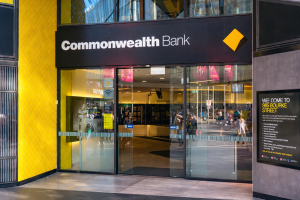
Commonwealth Bank of Australia is trading at valuation levels that already price in a large portion of its perceived safety and dividend appeal.
Traditional valuation frameworks suggest CBA trades well above sector-adjusted earnings value, with dividends doing most of the heavy lifting for long-term holders.
At current prices, CBA increasingly looks like a capital-preservation asset, not a value or growth opportunity.
At around A$156 per share, Commonwealth Bank of Australia sits near the top of the Australian market’s valuation spectrum. For many investors, particularly income-focused and long-term holders, the question is no longer whether CBA is a high-quality bank, but whether the price adequately compensates for the risks and limits future returns.
Australian banks occupy a unique position in domestic portfolios. Supported by an oligopolistic structure, strong pricing power, and a long history of dividend distributions enhanced by franking credits, they have become core holdings for many households. CBA, as the largest and most systemically important of the group, commands a premium for perceived safety and consistency.
The challenge is determining whether that premium has become excessive.
A common starting point in bank valuation is the price-to-earnings ratio. While simplistic on its own, it provides a useful benchmark when compared with peers and sector averages.
Using CBA’s most recent full-year earnings per share of A$5.63, the current share price implies a P/E multiple of roughly 28x. This stands in stark contrast to the broader banking sector, which trades closer to an average multiple of 18x.
Applying a sector-adjusted framework, multiplying CBA’s earnings by the average banking multiple produces an implied valuation closer to A$104 per share. That gap highlights the extent to which investors are paying a premium not for growth, but for stability, balance sheet strength, and dividend reliability.
From an earnings perspective alone, the stock screens as fully priced, if not stretched.
Where CBA’s investment case remains compelling is income. For Australian investors, dividends—particularly fully franked ones—often matter more than headline earnings multiples.
A dividend discount model places future cash distributions at the center of valuation. Using CBA’s most recent annual dividend of approximately A$4.65 per share, and applying a range of conservative growth and risk assumptions, dividend-based valuations cluster around A$98 to A$101 per share on a cash basis.
Adjusting for franking credits lifts the implied valuation closer to A$140–A$145, bringing it much closer to the current market price. This explains why CBA continues to attract demand despite elevated headline multiples: for domestic investors able to fully utilize franking credits, the effective yield remains attractive relative to alternatives.
Even so, the margin of safety is thin.
At current levels, investors are not buying growth optionality. They are buying predictability, brand dominance, and balance-sheet resilience. CBA’s premium reflects confidence that credit quality will remain contained, competition manageable, and capital returns steady.
That leaves little room for disappointment. Any sustained pressure on net interest margins, housing activity, or consumer balance sheets would challenge the assumption that CBA deserves to trade so far above sector norms.
For existing holders, CBA increasingly looks like a hold-for-income position rather than a source of incremental upside. The stock still plays a role in capital preservation and dividend stability, particularly in domestic portfolios optimized for franking credits.
For new capital, however, valuation discipline matters. At A$156, future returns are likely to be driven more by dividends than by share price appreciation, and that requires realistic expectations.
CBA remains a high-quality institution. The question is no longer about quality—it is about price, and whether investors are comfortable paying a premium that leaves little room for error in an uncertain economic cycle.
 Or Sushan
-
January 8, 2026
Or Sushan
-
January 8, 2026
 Or Sushan
-
January 8, 2026
Or Sushan
-
January 8, 2026
 Or Sushan
-
January 8, 2026
Or Sushan
-
January 8, 2026
 Or Sushan
-
January 8, 2026
Or Sushan
-
January 8, 2026