Stock market
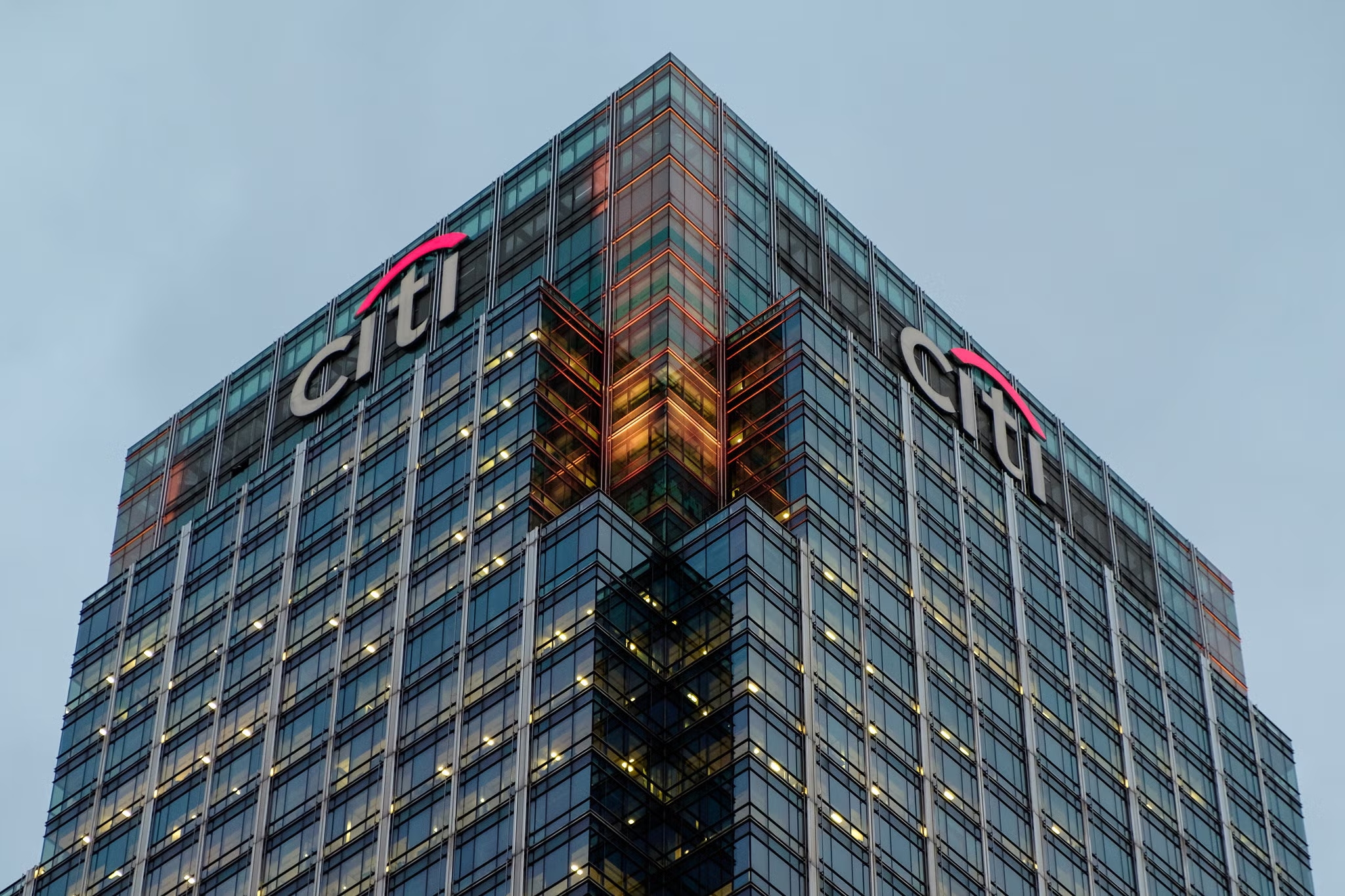
Citigroup shares edged lower as investors position ahead of its January 14 earnings release.
Stronger investment-banking activity in late 2025 is expected to support earnings, but expectations are rising.
Net interest margin, expenses, capital return signals, and credit costs will set near-term direction.
Citigroup enters earnings season in the first wave of major U.S. lenders, reporting on January 14, just one day after JPMorgan Chase kicks off results. Peers including Bank of America and Wells Fargo follow closely, putting Citi squarely in focus as an early read on the sector.
The stock slipped modestly in the days leading up to the report, reflecting cautious positioning rather than a decisive shift in sentiment. Citi remains close to where it started the week, suggesting investors are waiting for confirmation rather than exiting the trade.
Analysts broadly expect fourth-quarter earnings to benefit from a rebound in capital-markets activity. Dealogic data show global investment-banking revenue rose 15% in 2025, while M&A volumes surged 42%, creating what one analyst described as a “near-ideal setup” for fee income in the final quarter.
For Citi, which has been rebuilding its institutional franchise, markets and investment banking revenues are a key swing factor. Any evidence that momentum carried through December will reinforce the case that earnings power is improving beyond the traditional lending cycle.
Beyond headline EPS, investors are expected to focus on several areas during Citi’s results call and webcast later on January 14.
Net interest margin will be closely watched for signs that the rate environment is shifting from a drag toward a modest tailwind. Markets revenue will be scrutinized for any sign of normalization after a strong trading period, while credit costs will be parsed for early warning signals as macro uncertainty lingers.
Capital remains central to the discussion. Investors are likely to push management on expense discipline, capital ratios, and the timing and scale of potential buybacks once fourth-quarter numbers are finalized.
Citi’s pullback came amid a softer tone across financials, with the S&P 500 financials index under pressure and broader markets reacting to mixed U.S. labor data. That backdrop raises the bar for earnings season more generally, with investors increasingly sensitive to any disconnect between valuations and delivered results.
Recent commentary has highlighted that U.S. equities are priced for resilience. For banks, that means solid fee momentum and contained credit costs are increasingly required just to maintain current levels.
In the very near term, price action around Citi’s earnings will likely hinge on whether results justify optimism around capital-markets recovery without introducing new concerns on costs or credit.
As bank season unfolds, Citi’s January 14 report will serve as an early signal for how much confidence investors should place in the sector’s 2026 earnings narrative — and whether patience is rewarded, or caution proves prudent.

 Or Sushan
-
January 9, 2026
Or Sushan
-
January 9, 2026
 Or Sushan
-
January 8, 2026
Or Sushan
-
January 8, 2026
 Or Sushan
-
January 8, 2026
Or Sushan
-
January 8, 2026
 Or Sushan
-
January 8, 2026
Or Sushan
-
January 8, 2026