

Finance
Key Takeaways:
The U.S. Senate’s decisive advance of legislation designed to intensify sanctions pressure on Russia represents more than another development in the long-running geopolitical confrontation. For internationally mobile families, entrepreneurs and executives, it reinforces a broader trend: sanctions policy is increasingly transmitted through banking relationships, commercial counterparties and global payment infrastructure. The immediate question for private wealth is therefore not simply whether Russian assets are held, but whether any part of a family’s international structure could become exposed indirectly.
The proposed framework would give the U.S. administration significantly broader tools to target Russian financial and energy interests while potentially applying pressure to countries and companies that continue significant commercial relationships with Russia.
This creates a more complex risk environment for internationally diversified portfolios. A family may have no Russian securities, bank accounts or direct business interests, yet still maintain exposure through a private company, commodity transaction, logistics provider, financing arrangement or investment vehicle connected to a wider commercial network.
For wealth managers, the distinction between direct and indirect exposure is becoming increasingly important.
Zurich and Geneva private banks operate within sophisticated compliance frameworks, but the growing reach of sanctions regimes places greater emphasis on understanding the full economic chain behind a transaction.
For HNWI clients with businesses spanning Europe, the Middle East and Asia, a conventional jurisdiction-by-jurisdiction review may not adequately capture the risks. A transaction can be permissible under local law while simultaneously creating exposure under another jurisdiction’s sanctions regime.
The strategic implication is clear: international wealth structures should be evaluated as interconnected systems rather than as separate accounts and entities.
One of the most important areas for review is the counterparty network surrounding a family’s assets. This includes suppliers, lenders, investment partners, distributors, shipping companies, financial intermediaries and ultimate beneficial owners.
For families with operating businesses or private-market investments, the relevant question is no longer simply whether a named counterparty appears on a sanctions list. Advisers should understand who controls the entity, who ultimately benefits economically and how money moves through the transaction chain.
This level of diligence is particularly relevant where structures involve commodities, energy, shipping, emerging markets or jurisdictions maintaining substantial commercial relationships with Russia.
Families with substantial international assets should consider commissioning a structured sanctions-exposure review across their banking relationships, operating companies and investment vehicles.
The review should map beneficial ownership, major counterparties, payment corridors and relevant jurisdictions. It should also identify situations where a change in sanctions policy could affect access to liquidity, settlement or banking services even without a direct change to the underlying investment.
For families using several private banks, consistency is equally important. Different institutions may apply different risk tolerances, creating the possibility that an otherwise legitimate transaction is delayed or rejected by one banking relationship.
The latest Senate action highlights a broader transformation in global wealth management. Geopolitical policy is increasingly capable of affecting private wealth through banking infrastructure, payment systems and commercial networks.
For HNWI families, sanctions resilience should therefore be treated as part of capital preservation and operational continuity. The strongest structures are not necessarily those with the greatest number of jurisdictions or entities. They are structures whose ownership, liquidity and transaction flows can be explained clearly and defended under scrutiny.
For a confidential discussion regarding your cross-border banking structure, contact our senior advisory team.
 Previous Post
 SKN | Dubai Banking Under Pressure as AWS Disruption Exposes the Cost of Cloud Dependence
Next Post SKN | Wells Fargo Forgives $11,000 Credit Card Debt After Inquiry Into Disabled Veteran’s Case

September 8, 2026
September 8, 2026

September 8, 2026

September 8, 2026
SKN | Charles Schwab Expands Crypto Access as Shares Trade Below Estimated Fair Value
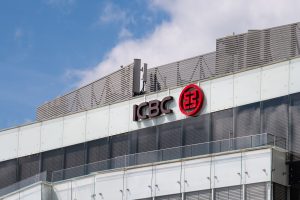
SKN | Why Does the World’s Largest Bank Still Need State Capital? What ICBC’s Recapitalization Signals for HNW Families
SKN | CaixaBank’s Neobank Strategy: Why Digital Convenience Is Becoming Part of Institutional Banking
 Optimized by Seraphinite Accelerator


