Finance
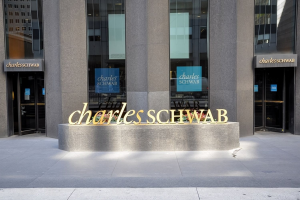
Charles Schwab is entering an important phase in which the strength of its banking and wealth-management franchise is being tested against changing investor behavior. The reference analysis highlights a combination of strong long-term performance, improving profitability and more attractive valuation metrics, while also pointing to a growing preference among retail investors for artificial-intelligence-related equities.
For sophisticated wealth holders, the more important question is not whether Schwab has delivered strong historical returns. It is whether the institution can continue converting its enormous brokerage, banking and asset-management platform into sustainable earnings as client preferences evolve.
The bank’s profitability metrics provide an important foundation. The reference material indicates that Schwab’s net margin improved to 38.79%, compared with 37.99% previously. The improvement suggests that the institution continues to extract meaningful operating efficiency from its large financial-services platform.
For a bank with extensive brokerage, banking, custody and investment-management operations, efficiency is strategically important. A scalable platform allows revenue growth to translate into stronger profitability without requiring expenses to increase at the same pace.
One of the more significant challenges identified in the reference material is a shift among retail investors toward AI stocks. Lower entry prices and the prospect of participating in the technology sector have increased the appeal of highly visible AI companies, potentially changing how investors allocate capital across traditional brokerage platforms.
This does not necessarily weaken Schwab’s franchise. In fact, a broad brokerage platform can benefit when clients rotate between sectors, asset classes and investment themes. The strategic challenge is ensuring that Schwab remains the preferred infrastructure through which investors execute those decisions.
Schwab’s ETF offering remains another important competitive asset. The reference analysis highlights low expense ratios and competitive yields, characteristics that can appeal to cost-conscious investors and reinforce the institution’s broader investment ecosystem.
For HNWI clients, this matters because cost efficiency becomes increasingly relevant as portfolios grow. A platform that combines competitive investment products with brokerage, banking and wealth-management capabilities can create greater value than any individual product in isolation.
The reference material indicates that Schwab’s P/E ratio declined to 16.51x, while its P/B ratio declined to 3.65x. Those changes suggest that the market valuation has become comparatively more attractive even as the institution continues to demonstrate strong profitability.
That combination deserves attention. Improving operating efficiency alongside more disciplined valuation metrics can strengthen the investment narrative, provided Schwab maintains earnings momentum and client engagement.
The strategic issue for Schwab is therefore not simply its share-price performance. Its long-term franchise value depends on retaining clients, expanding assets, maintaining competitive investment products and preserving the efficiency of its banking and wealth-management infrastructure.
For HNWI clients, Schwab remains relevant as a case study in how a major financial institution can adapt to changing investor preferences while leveraging scale. The next test will be whether its platform continues to capture client assets as capital increasingly moves toward new investment themes.
For a confidential discussion regarding global banking relationships, custody structures and cross-border wealth architecture, contact our senior advisory team.
 Previous Post
 SKN | Capital One’s $1 Billion Transformation Signals a Broader Push for Scale and Brand Power
Next Post SKN | Goldman Sachs Deepens Its AI Infrastructure Strategy With a $500 Billion Financing Initiative

September 8, 2026

September 8, 2026

September 8, 2026

September 8, 2026
 Optimized by Seraphinite Accelerator