Stock market
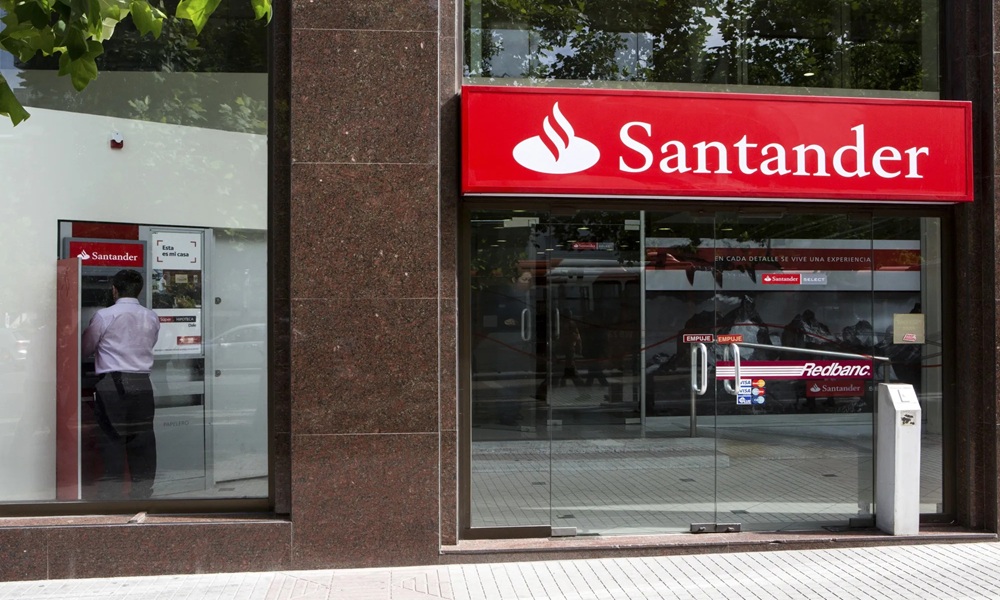
Banco Santander’s acquisition of Webster Financial materially deepens its U.S. footprint, positioning it as a stronger Northeast regional competitor.
The transaction reflects a broader trend of scale-driven bank consolidation as regulation eases and competition from fintech and crypto intensifies.
Execution risk and integration discipline will determine whether the deal translates into sustainable returns on capital.
Banco Santander has agreed to acquire Webster Financial in a cash-and-stock transaction valued at $12.3 billion, accelerating the Spanish lender’s long-stated ambition to expand meaningfully in the United States.
Under the terms of the deal, Webster will become a wholly owned unit of Santander, with the transaction expected to close in the second half of the year. The acquisition adds a bank with more than $80 billion in assets and a dense branch network across Connecticut, Massachusetts, Rhode Island, and the New York metropolitan area.
Santander described the acquisition as “strategically significant” for its U.S. operations, positioning the group as a top-tier player in the Northeast. While Santander is already a major U.S. auto lender and maintains a modest retail presence through branches and ATMs, its U.S. banking franchise has historically lacked the scale of leading regional peers.
Webster’s footprint provides Santander with immediate critical mass in a high-income, commercially active region, narrowing the gap with larger U.S. regional banks and strengthening its ability to compete for deposits, lending, and fee-based business.
The deal lands amid a more accommodative U.S. regulatory climate for bank mergers and acquisitions. With competitive pressure rising from megabanks, fintech platforms, and crypto-native firms seeking bank-like capabilities, scale has become a strategic imperative rather than an option.
Santander’s move follows a broader pattern of international banks using acquisitions to accelerate U.S. growth rather than relying solely on organic expansion, which can be slower and less predictable.
Webster will operate as a wholly owned subsidiary, while Christiana Riley will remain Santander’s U.S. country head and CEO of Santander Holdings USA. This continuity signals an intent to balance integration with local market knowledge, a key factor in preserving client relationships and franchise value during large cross-border combinations.
Investors will be closely watching integration milestones, cost synergies, and capital impacts as the deal progresses.
Santander’s acquisition of Webster represents a clear escalation in its U.S. strategy, shifting the narrative from selective presence to meaningful regional scale. If executed well, the transaction could reposition Santander as a more formidable U.S. banking competitor. If not, the size and visibility of the deal mean missteps would be quickly reflected in returns.
For a confidential discussion on how cross-border bank consolidation, U.S. regional exposure, and capital deployment strategies can be assessed within a global portfolio allocation, contact our senior advisory team.
 Previous Post
 SKN | JPMorgan Chase Q4 Earnings Surprise Highlights Cost Discipline as Market Looks to 2026
 Next Post
 SKN | U.S. Bank COO Retirement Signals Operational Transition at a Critical Moment
March 26, 2026

March 26, 2026
March 26, 2026
March 25, 2026
 Optimized by Seraphinite Accelerator