Finance
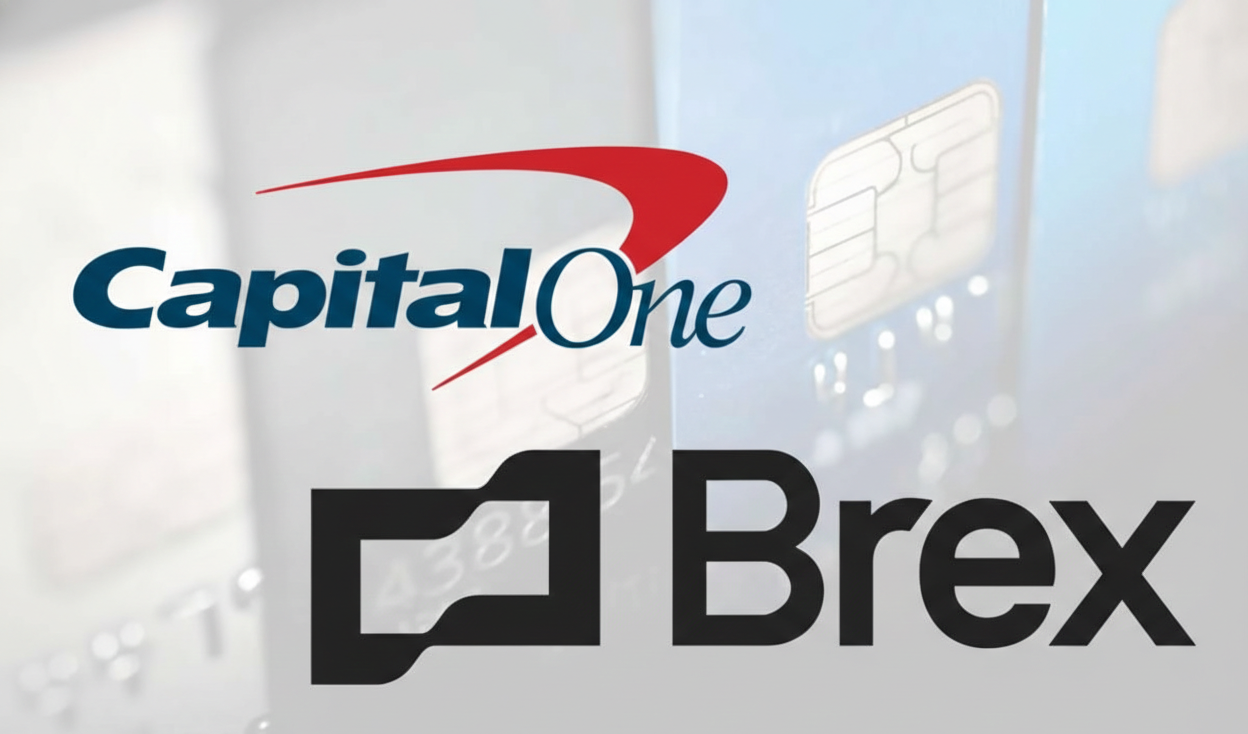
Capital One Financial remains the central focus in U.S. banking after announcing a $5.15 billion acquisition of fintech firm Brex, alongside the release of strong quarterly earnings that highlighted resilient profitability and balance-sheet momentum.
The pairing of strategic expansion with earnings strength positions Capital One as one of the most consequential U.S. banking stories of the current reporting cycle.
The Brex acquisition represents a decisive move beyond Capital One’s traditional consumer banking and credit card franchises. By acquiring a platform deeply embedded in corporate payments, expense management, and startup finance, Capital One gains access to faster-growing, fee-oriented revenue streams that are structurally less sensitive to interest-rate cycles.
Rather than incremental digital upgrades, the deal reflects a structural bet on owning fintech infrastructure at scale, accelerating Capital One’s relevance in business banking ecosystems where data, payments, and workflow integration increasingly drive client stickiness.
Capital One’s quarterly results reinforced confidence in the timing of the acquisition. Net interest income rose sharply, supported by disciplined loan pricing, stable funding costs, and continued asset repricing. Profitability remained resilient despite ongoing scrutiny of consumer credit trends across the sector.
The strength of earnings provides Capital One with strategic flexibility, allowing it to absorb integration costs while preserving capital ratios and maintaining optionality around shareholder returns.
Investor focus has moved away from near-term credit cycle debates and toward execution risk. Key questions now center on Brex client retention, the pace of non-interest income contribution, and how quickly fintech capabilities can be embedded across Capital One’s broader commercial and payments platform.
Relative to peers, Capital One stands apart for committing capital to growth rather than relying solely on cost discipline or balance-sheet optimization to sustain returns.
The Brex transaction highlights a broader shift within U.S. banking, where scale alone is no longer sufficient. Control over payments infrastructure, data flows, and embedded finance is becoming central to competitive positioning.
Capital One’s willingness to deploy capital at this stage of the cycle signals confidence that fintech integration can enhance, rather than dilute, long-term earnings quality.
As 2026 approaches, Capital One enters the year with both earnings momentum and a clearly articulated growth strategy. Successful execution of the Brex integration could reshape the bank’s revenue mix and reinforce its standing as one of the more adaptive large U.S. lenders.
For now, the transaction and accompanying earnings performance set a benchmark for how U.S. banks are expected to balance profitability, innovation, and strategic ambition in the next phase of the cycle.
For a confidential discussion on how large-scale fintech acquisitions, earnings durability, and U.S. bank balance-sheet positioning can be assessed within a global portfolio allocation, contact our senior advisory team.
 Previous Post
 SKN | ING Group Profit Beat Strengthens Confidence Heading Into 2026
 Next Post
 SKN | Deutsche Bank Sees Taiwan Economy Expanding 4.8% in 2026 on Tech Momentum

March 25, 2026

March 25, 2026

March 25, 2026

March 25, 2026
 Optimized by Seraphinite Accelerator