Stock market
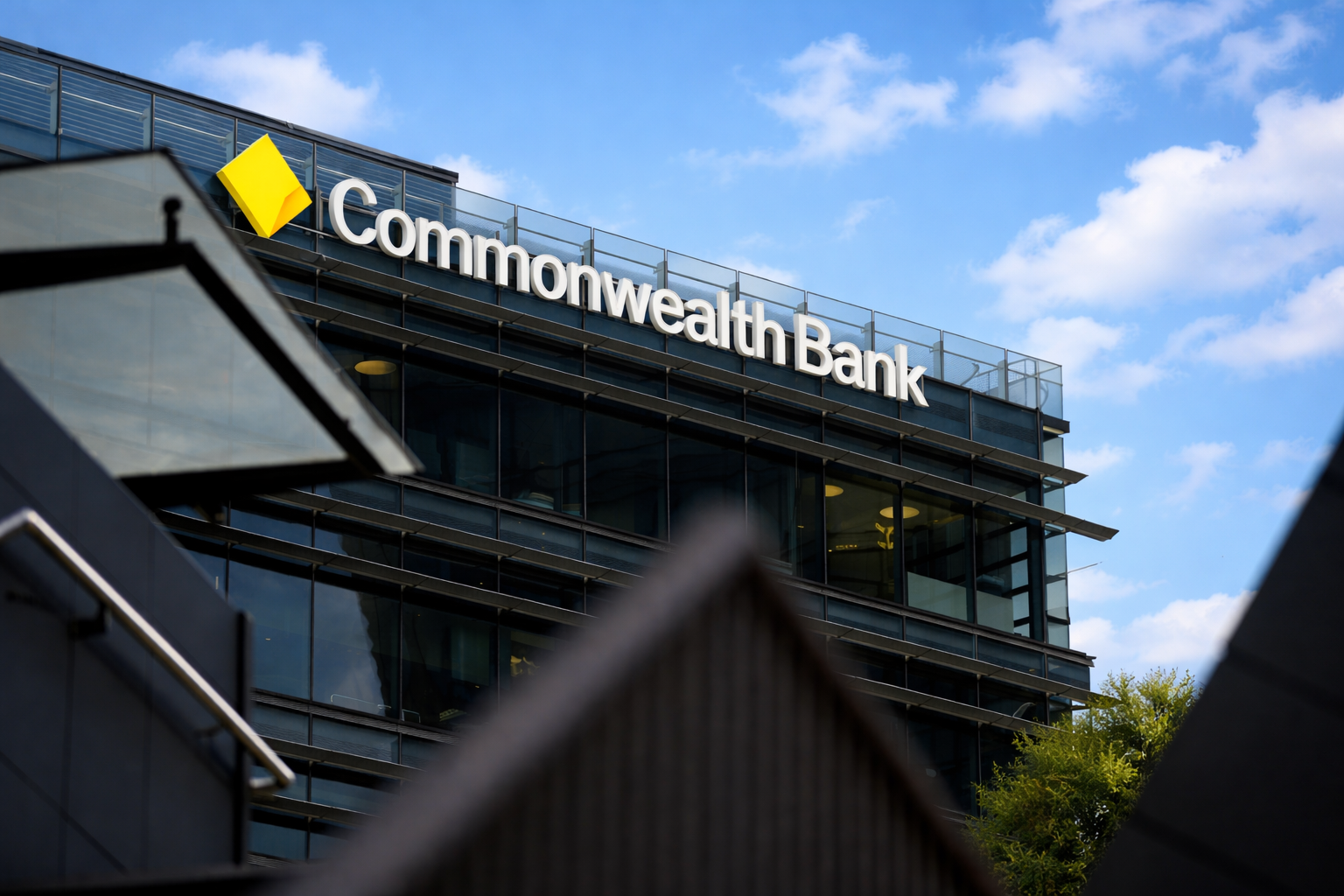
Commonwealth Bank shares outperformed the broader market as investors looked through near-term provisions toward upcoming earnings and dividends.
A$68m ASIC-related provision and A$53m in one-off income frame expectations ahead of the Feb. 11 half-year results.
Rising interest rates may support margins but increase scrutiny on costs, credit quality, and dividend sustainability.
Commonwealth Bank of Australia finished 1.4% higher at A$159.28, outperforming a weaker S&P/ASX 200 session and signaling investor confidence ahead of the bank’s upcoming half-year results. The move also came as peers showed relative resilience, reinforcing the view that financials are being positioned defensively as earnings season approaches.
The timing matters. CBA’s interim results and dividend announcement on Feb. 11 typically act as an anchor event for income-focused portfolios across the Australian market, often influencing sentiment toward the entire banking sector.
CBA disclosed a A$68 million pre-tax provision within operating expenses tied to additional goodwill payments linked to the corporate regulator’s Better Banking review. Alongside this, the bank reported A$53 million in non-recurring income, including a milestone payment from the sale of Commonwealth Insurance and a fair value gain related to its investment in Gemini following the crypto exchange’s IPO.
While these items complicate headline comparisons, investors appear to be looking past near-term noise and toward underlying profitability, capital strength, and the interim dividend outlook. Management has also cautioned that customer re-segmentation will lead to restated divisional comparatives, adding another layer to how the results will be read.
The backdrop has shifted meaningfully following the Reserve Bank of Australia decision to lift the cash rate by 25 basis points to 3.85%. Higher rates generally support bank net interest margins, but they also increase pressure on borrowers and raise the risk of higher loan impairments over time.
CBA, along with Westpac, ANZ, and NAB, moved quickly to pass on rate hikes to variable home-loan and certain business borrowers. The market now faces the familiar trade-off: stronger near-term earnings versus potential medium-term credit stress and intensified competition for deposits.
As CBA heads into its results, attention will center on net interest margin trends, cost control following the ASIC provision, credit quality signals, and the size and sustainability of the interim dividend. With the stock set to go ex-dividend on Feb. 18 and payment expected around late March, positioning decisions are likely to remain active right up to the release.
The share price reaction suggests the market is currently comfortable with the balance of risks, but guidance and management commentary will determine whether that confidence holds.
For a confidential discussion on how Australian bank earnings, regulatory provisions, interest-rate sensitivity, and dividend sustainability can be assessed within a broader portfolio allocation framework, contact our senior advisory team.
 Previous Post
 SKN | BNP Paribas Shares Jump on Profit Beat as Higher Mid-Term Targets Lift Confidence
 Next Post
 SKN | Has HSBC Holdings (LSE:HSBA) Risen Too Far After Strong Multi-Year Share Price Gains?

March 27, 2026

March 27, 2026

March 27, 2026

March 26, 2026
 Optimized by Seraphinite Accelerator