
Finance
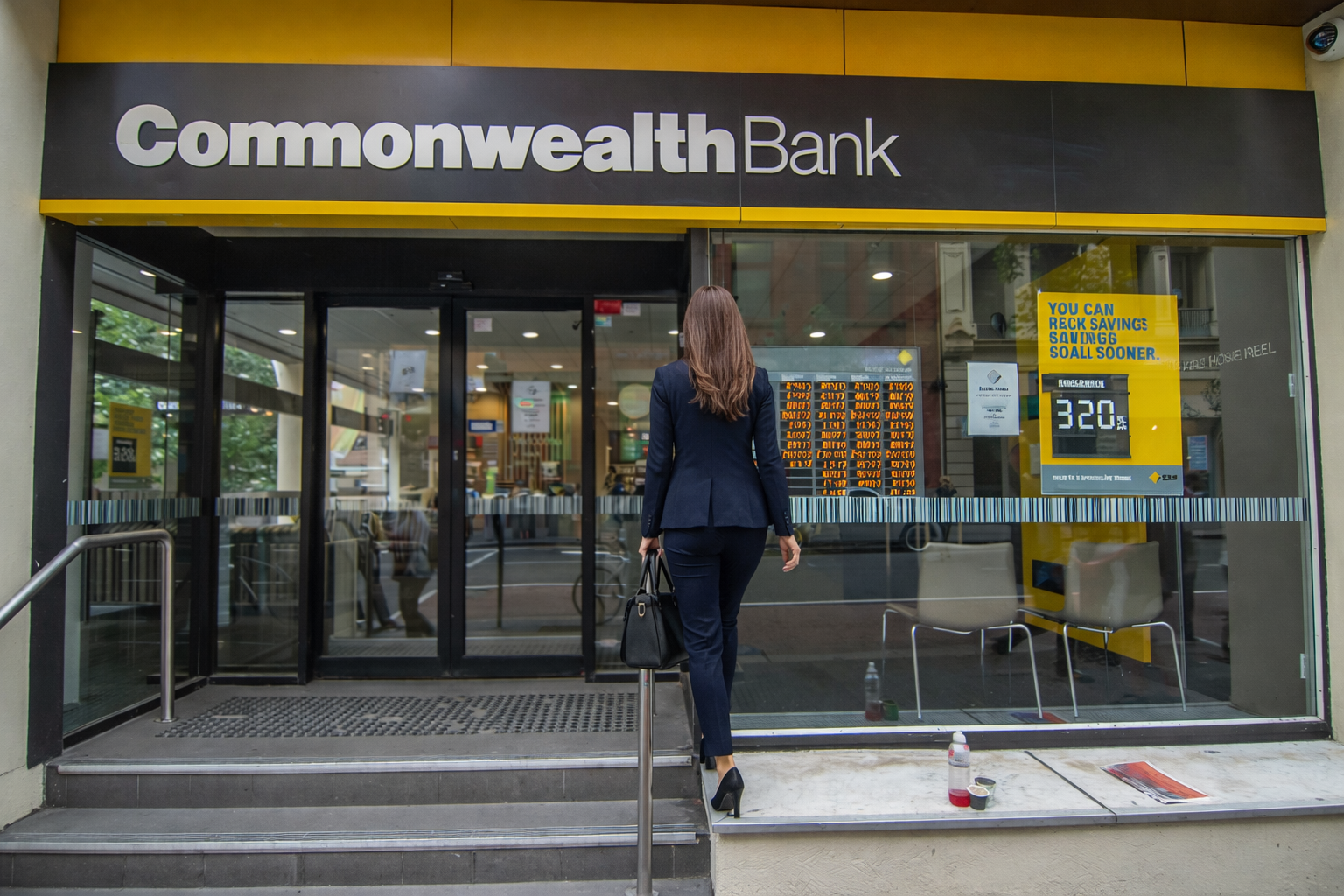
Commonwealth Bank of Australia has released its half-year results alongside a fully franked interim dividend of A$2.35 per share, delivering fresh clarity on earnings power, capital strength and income distribution at a time when interest-rate expectations remain fluid.
The update triggered a sharp market reaction. Shares jumped 6.82% in a single session, extending the 30-day gain to 10.05% and pushing the stock to A$169.56. That compares with a 1-year total shareholder return of 5.19% and a 5-year return of 138.13%, suggesting near-term momentum has recently outpaced the longer-term trend.
The immediate question for disciplined investors is straightforward: does A$169.56 represent justified optimism, or does it reflect stretched expectations?
The fully franked A$2.35 interim dividend reinforces CBA’s positioning as a premium income vehicle within the Australian banking sector. For domestic investors, franking credits materially enhance after-tax yield, supporting valuation multiples relative to global peers.
However, valuation must be separated from yield alone. The earnings base, margin trajectory and capital position ultimately determine sustainability.
The strong price reaction implies that investors viewed the results as sufficiently robust to justify paying up for perceived quality. Yet valuation frameworks remain divided.
At A$169.56, the most widely followed valuation narrative assigns a fair value of A$120.47 — implying the shares are approximately 40.8% overvalued relative to modeled assumptions.
Sell-side consensus also leans materially lower, with an average price target of A$117.82. The most bullish analyst projects A$146.00, while the most bearish sits at A$100.00. Even the high-end target remains below the current market price.
The divergence highlights how sensitive CBA’s valuation is to:
Net interest margin sustainability
Cost control amid inflation and technology investment
Credit quality stability in a higher-rate environment
The multiple investors are willing to assign to earnings
When a bank trades at a sector premium, even an “in-line” result can compress upside.
CBA has consistently commanded higher multiples than domestic peers due to perceived balance-sheet strength, digital leadership and capital discipline.
If technology investments accelerate operating leverage or if deposit franchise strength supports margins better than feared, today’s valuation gap could narrow over time. Similarly, resilient mortgage share within Australia’s A$2.4 trillion housing market reinforces structural relevance.
The premium valuation therefore reflects confidence in execution — not merely recent earnings.
At current levels, CBA appears priced for stability and continued outperformance rather than turnaround optionality. That positioning reduces margin for error.
Income-focused investors may prioritize dividend reliability and franking benefits. Total-return investors must weigh whether earnings growth justifies paying materially above consensus targets.
In short, valuation tension now dominates the narrative.
CBA remains a high-quality franchise. The debate is no longer about strength — it is about price versus expectation.
For a confidential discussion on bank valuation premiums, dividend sustainability under shifting rate regimes, and portfolio positioning within Australia’s major banks, contact our senior advisory team.
 Previous Post
 SKN | Barclays’ Cost Discipline and AI Strategy: How Efficiency Is Being Repriced Into Shareholder Returns
 Next Post
 SKN | HSBC Lifts Marriott Target: What Premium Travel Demand Signals for Global Asset Allocation

March 27, 2026

March 27, 2026

March 27, 2026

March 27, 2026
 Optimized by Seraphinite Accelerator


