Stock market
Mahesh Aditya’s appointment as Santander UK CEO signals a risk-led, execution-first approach to the US$3.4bn TSB integration.
The TSB acquisition materially reshapes Santander UK’s scale, positioning it as a top-tier player in current accounts and mortgages.
Integration discipline—technology, costs, and customer retention—will be the primary driver of value creation, not headline growth.
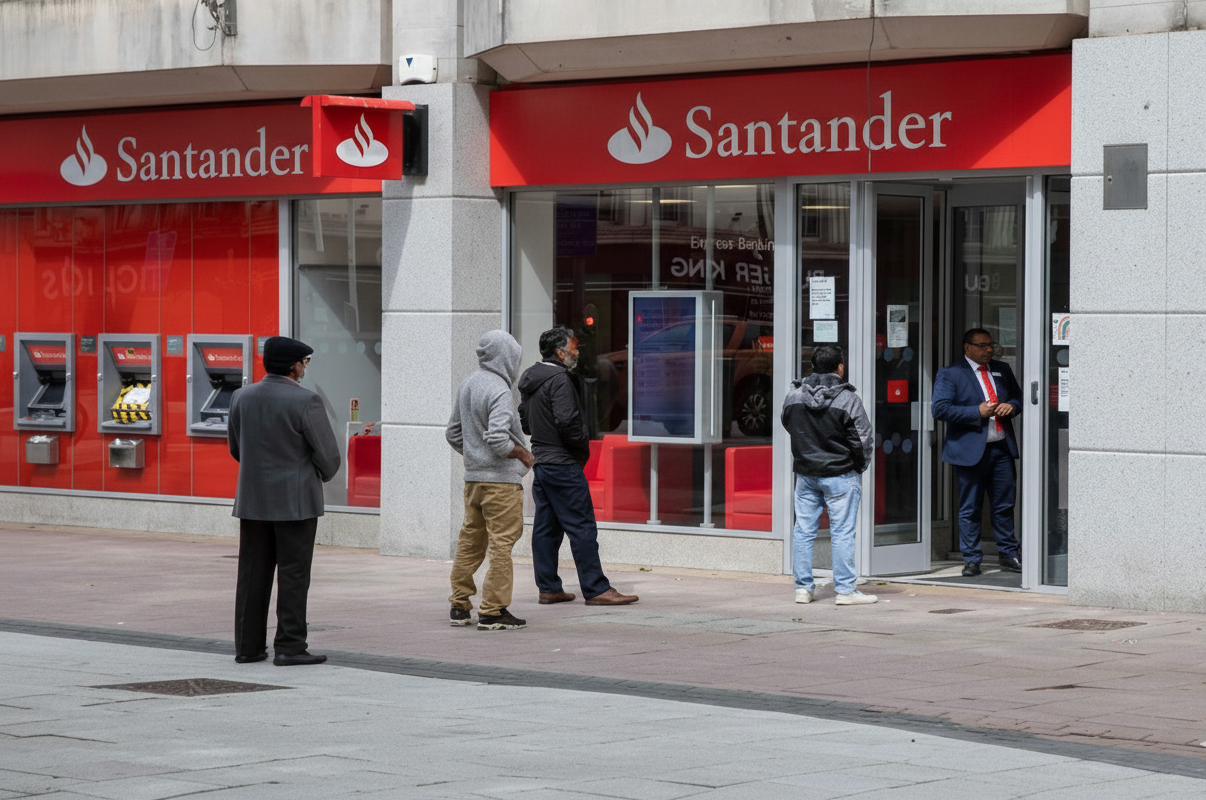
Santander UK has appointed Mahesh Aditya as its next chief executive, effective 1 March 2026, tasking him with leading one of the most consequential phases in the bank’s UK strategy: the acquisition and integration of TSB Banking Group.
The leadership transition comes as Santander advances its US$3.4bn acquisition of TSB from Banco Sabadell, a deal announced in July 2025 and expected to complete in early 2026, subject to regulatory and shareholder approvals.
Aditya steps into the role after nearly a decade in senior positions across the Santander Group, most recently as Group Chief Risk Officer. That background is telling. Santander is signaling that the TSB integration will be governed less by aggressive expansion targets and more by balance-sheet discipline, operational control, and regulatory credibility.
For investors, this matters. Large UK bank integrations tend to fail not on strategy, but on execution—technology migration, cost synergies, and customer attrition. A CEO with deep risk oversight experience is structurally aligned with minimizing downside while extracting long-term value.
TSB brings scale. With around 175 branches and close to five million customers, its addition positions the combined group as the third-largest UK bank by personal current account balances and the fourth-largest by mortgage lending. Post-integration, Santander UK and TSB together will serve nearly 28 million retail and business customers.
Strategically, the deal accelerates Santander’s long-running UK transformation agenda by:
Deepening its retail and SME footprint
Spreading technology and compliance costs over a larger customer base
Enhancing cross-sell opportunities across mortgages, savings, and everyday banking
Santander has emphasized technology integration as a core pillar, aiming to consolidate infrastructure onto a more streamlined digital banking model.
Santander is not new to UK bank integrations. The group absorbed Abbey in 2004, followed by Alliance & Leicester and parts of Bradford & Bingley in 2008. That history provides credibility—but the context is different. Today’s integration takes place under tighter regulatory scrutiny, higher customer expectations around digital service continuity, and thinner tolerance for operational missteps.
Aditya’s challenge will be to replicate past successes without triggering disruption that could erode trust or dilute returns.
This appointment reframes the TSB acquisition as a controlled transformation rather than a growth-at-all-costs expansion. The investment case will hinge on three variables: execution speed, cost synergy realization, and customer retention through the technology transition.
For a confidential discussion on how large-scale bank integrations, risk-led leadership transitions, and UK retail banking consolidation can be assessed within a diversified financials allocation, contact our senior advisory team.
 Previous Post
 SKN | BofA’s Market Signal Points to Moderate S&P 500 Upside — A Reality Check for Global Capital
 Next Post
 SKN | HSBC Hits 52-Week High as Valuation and Strategy Come Into Sharper Focus

March 27, 2026

March 27, 2026

March 27, 2026
March 26, 2026
 Optimized by Seraphinite Accelerator