Stock market
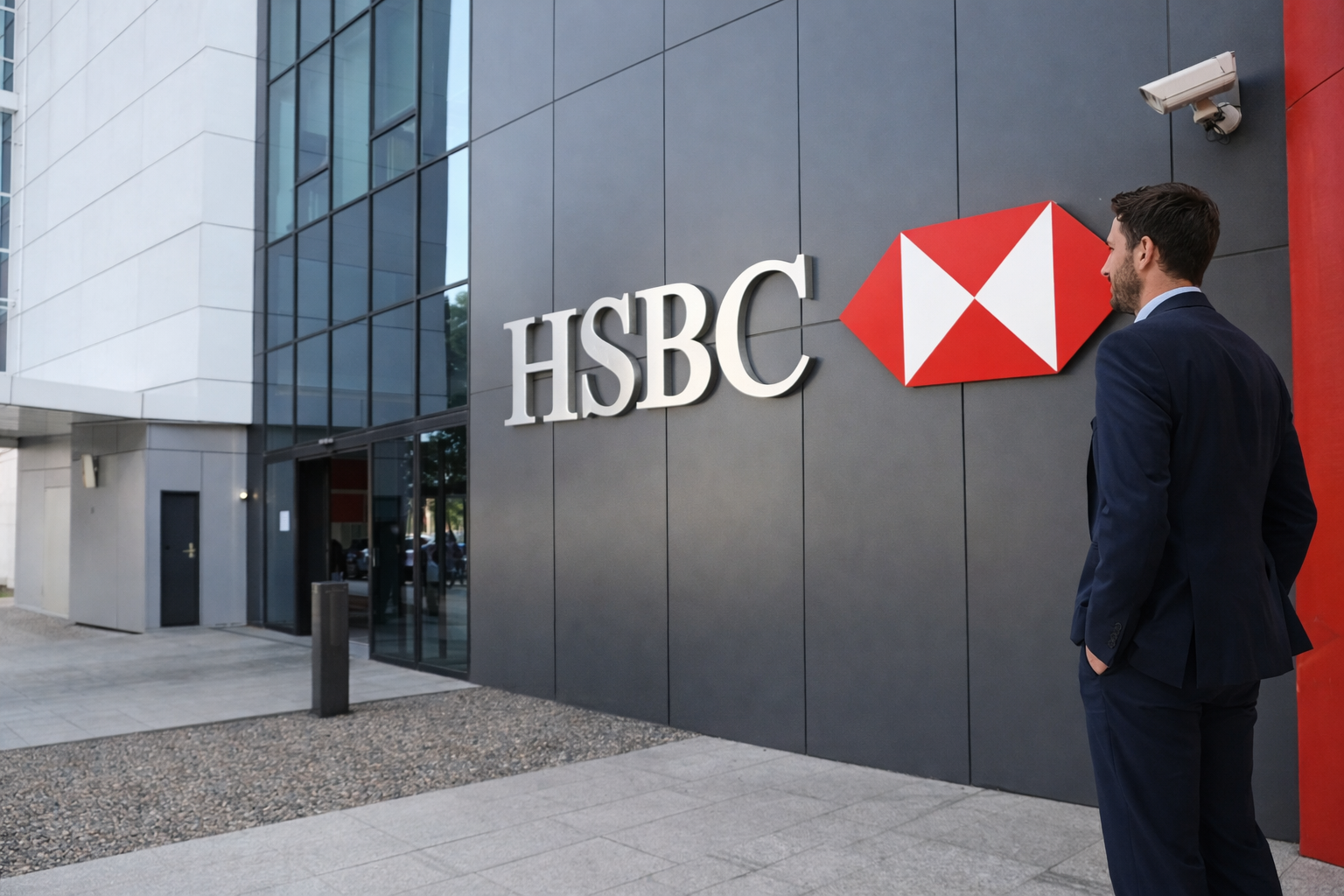
HSBC Holdings shares are trading close to record levels, placing the stock at a crossroads as investors debate what matters more in the near term: interest-rate expectations or management guidance. As with most UK lenders, HSBC’s valuation has tracked shifts in rate assumptions closely, and even small changes in outlook can have an outsized impact.
At the heart of the debate is net interest income, the spread between what banks earn on loans and pay on deposits. When rates fall, this margin typically comes under pressure, and bank share prices often reprice well before the impact shows up in earnings.
The Bank of England is expected to keep Bank Rate unchanged at 3.75% this week, but markets are increasingly questioning how soon cuts might arrive. Deutsche Bank’s Sanjay Raja noted that expectations for multiple reductions this year have already been pared back. For HSBC, any signal that rates stay “higher for longer” would support margins, while faster easing would test the sustainability of current profitability.
UK business sentiment has shown tentative improvement. The Institute of Directors’ economic optimism index rose in January, but it remains firmly negative. Businesses are still reluctant to commit to higher capital spending or hiring, suggesting loan growth may stay subdued even if confidence stabilises. That backdrop limits upside from volume growth, keeping the focus squarely on pricing discipline and cost control.
HSBC’s full-year results on Feb. 25 are shaping up as the next major catalyst. According to recent reports, HSBC and peers such as NatWest, Barclays, and Lloyds are expected to raise profit targets. For HSBC, the key metric is return on tangible equity (RoTE). Any upward revision would reinforce the case that earnings resilience has lasted longer than many expected.
Investors will also be watching closely for clarity on dividends and buybacks, especially after a strong rally that has already lifted expectations for capital returns.
Beyond rates and guidance, HSBC continues to reshape its portfolio. The privatisation of Hang Seng Bank took effect in late January, with shares delisted in Hong Kong. Management has stressed that Hang Seng retains its own governance and brand, but the move simplifies group structure and capital management.
Separately, Chesnara completed the acquisition of HSBC Life (UK), marking another step in HSBC’s strategy to streamline non-core operations while sharpening its focus on wealth and Asian growth.
The rally has propelled HSBC to the top tier of the UK market by value, underscoring confidence in its strategy. But risks remain finely balanced. Faster-than-expected rate cuts, intensifying competition for deposits, or pressure to lend at slimmer margins could all squeeze returns. If growth slows, credit costs could rise just as margins compress.
The immediate signposts are clear: the Bank of England’s policy decision this week and HSBC’s results on Feb. 25. Changes in RoTE targets, commentary on buybacks, and updates on Asian growth ambitions will likely determine whether the stock can extend its rally—or whether near-record highs prove to be a pause point.
For a confidential discussion on how interest-rate sensitivity, capital-return sustainability, and Asia-driven growth at HSBC can be evaluated within a global banking allocation, contact our senior advisory team.
 Previous Post
 SKN | Barclays Shares Ease as £500m Buyback Concludes, Focus Turns to Rates and Earnings
 Next Post
 SKN | Bank of New York Mellon’s Valuation in Focus After F1 Partnership and Leadership Reset
March 27, 2026
March 27, 2026

March 27, 2026

March 26, 2026
 Optimized by Seraphinite Accelerator