Stock market
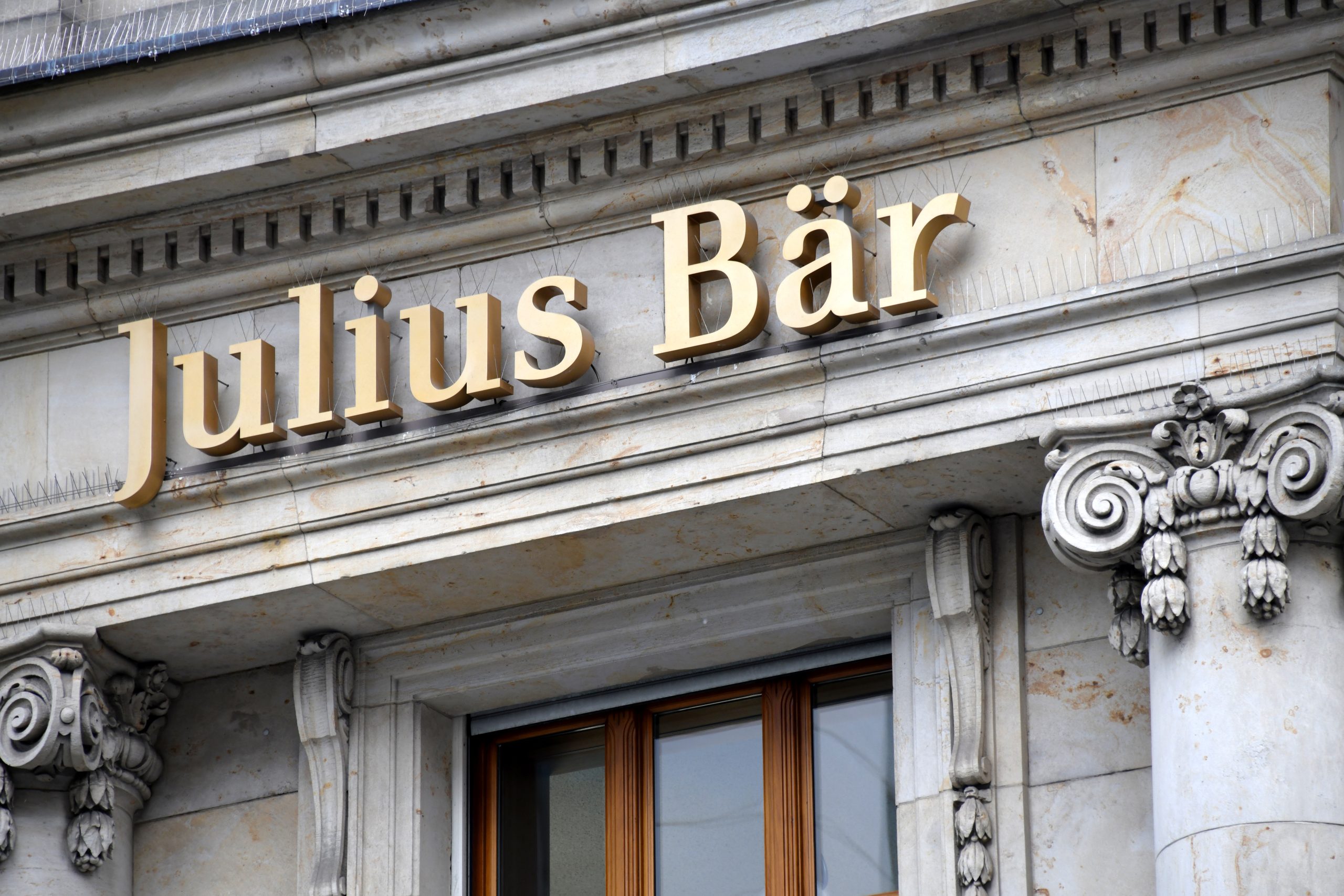
Julius Baer’s full-year results for 2025 underscore a nuanced inflection point in Swiss private banking. While headlines emphasize a 25% decline in net profit, a deeper reading reveals both the structural strengths that have underpinned long-standing wealth management franchises and the risk vectors that sophisticated capital stewards must integrate into cross-jurisdictional planning.
For privately held mandates, multi-family offices, and globally mobile families whose capital is overseen within Swiss wealth platforms, the relevance is not the profit contraction itself — but what it signals about capital resilience, loan book quality, regulatory overhang, and client confidence across volatile market conditions.
Reported net profit fell to CHF 764 million in 2025 — down 25% from 2024 — primarily due to a CHF 213 million charge for credit losses, higher tax expenses, and the absence of a prior-year one-off gain. At face value, this contraction can appear concerning. However, underlying pre-tax profit expanded materially, driven by net new money growth, higher operating income, and disciplined cost controls that tightened the cost-to-income ratio.
For HNWI, this divergence between headline net profit and underlying momentum is strategically significant. It reflects normalization after episodic portfolio losses rather than structural erosion of the franchise. A substantial portion of Julius Baer’s revenue base remains anchored in fee-based asset management — a model structurally less exposed to credit cycles than traditional balance-sheet-driven banking, and historically more stable through macro inflection points.
Even as profits contracted, assets under management expanded by 5% to CHF 521 billion, with CHF 14.4 billion in net new money recorded in 2025. These inflows — from Asia, Western Europe, and the Middle East — signal persistent confidence among globally diversified clients, an important indicator of Swiss private banking’s continued relevance in capital preservation and cross-border asset aggregation.
From a governance perspective, this matters materially. A rising AuM base and geographically diversified inflows provide balance-sheet depth, pricing power, and structural resilience during periods when loan provisions and regulatory costs increase. Distributed inflows also dilute concentration risk — a structural vulnerability in regionally concentrated private banks.
Despite operational improvements, Julius Baer remains under regulatory review related to prior credit exposures, constraining share repurchases and capital return initiatives. For HNWI accustomed to Swiss banks managing capital conservatively while returning excess capital predictably, this represents a strategic inflection point: regulatory scrutiny can materially alter the timing and structure of capital distributions, even within well-capitalized institutions.
In practical terms, this introduces regulatory timing risk as a structural variable in wealth planning. Capital preservation strategies must account for counterparty regulatory cycles — particularly where liquidity planning, yield expectations, or structural leverage assumptions intersect with bank balance-sheet policy.
Under CEO Stefan Bollinger, 2025 has been positioned as a transition year, reflecting a deliberate pivot toward core advisory strengths and away from higher-risk credit exposures that previously pressured capital. For HNWI, this reinforces the classical Swiss private banking advantage: fee-based fiduciary advisory models anchored in governance discipline rather than balance-sheet risk taking.
Operational discipline, reflected in a leaner cost structure and tighter efficiency metrics, complements this strategic reset. These indicators provide a clearer lens for evaluating a bank’s ability to generate stable, recurring franchise earnings independent of credit cycles and market volatility.
For cross-border wealth structures anchored in Swiss private banking platforms, several practical insights emerge. Counterparty resilience must be evaluated through earnings composition, not profit headlines. Regulatory timing must be integrated into capital and liquidity planning. Client flow trends should be treated as leading indicators of institutional trust, often more informative than short-term earnings volatility.
Swiss private banks with strong capital buffers, diversified client bases, and disciplined governance frameworks remain structurally sound partners in preserving and transmitting wealth — even when cyclical setbacks temporarily depress reported earnings.
Julius Baer’s 2025 profile reflects not institutional fragility, but structural recalibration. For HNWI, the strategic lesson is clear: wealth preservation is not anchored in quarterly profits, but in governance quality, balance-sheet discipline, jurisdictional resilience, and institutional continuity.
For a confidential discussion on how evolving private bank performance profiles intersect with your cross-border banking structure, counterparty risk framework, and long-term capital preservation strategy, contact our senior advisory team.
 Previous Post
 SKN | Whistleblowing at Bank of London: A Canary in the Mine for Counterparty and Governance Risk?
 Next Post
 SKN | BNP Paribas: Strategic Insights for HNWI Cross-Border Wealth Management

March 27, 2026

March 27, 2026

March 27, 2026
March 26, 2026
 Optimized by Seraphinite Accelerator