
Finance
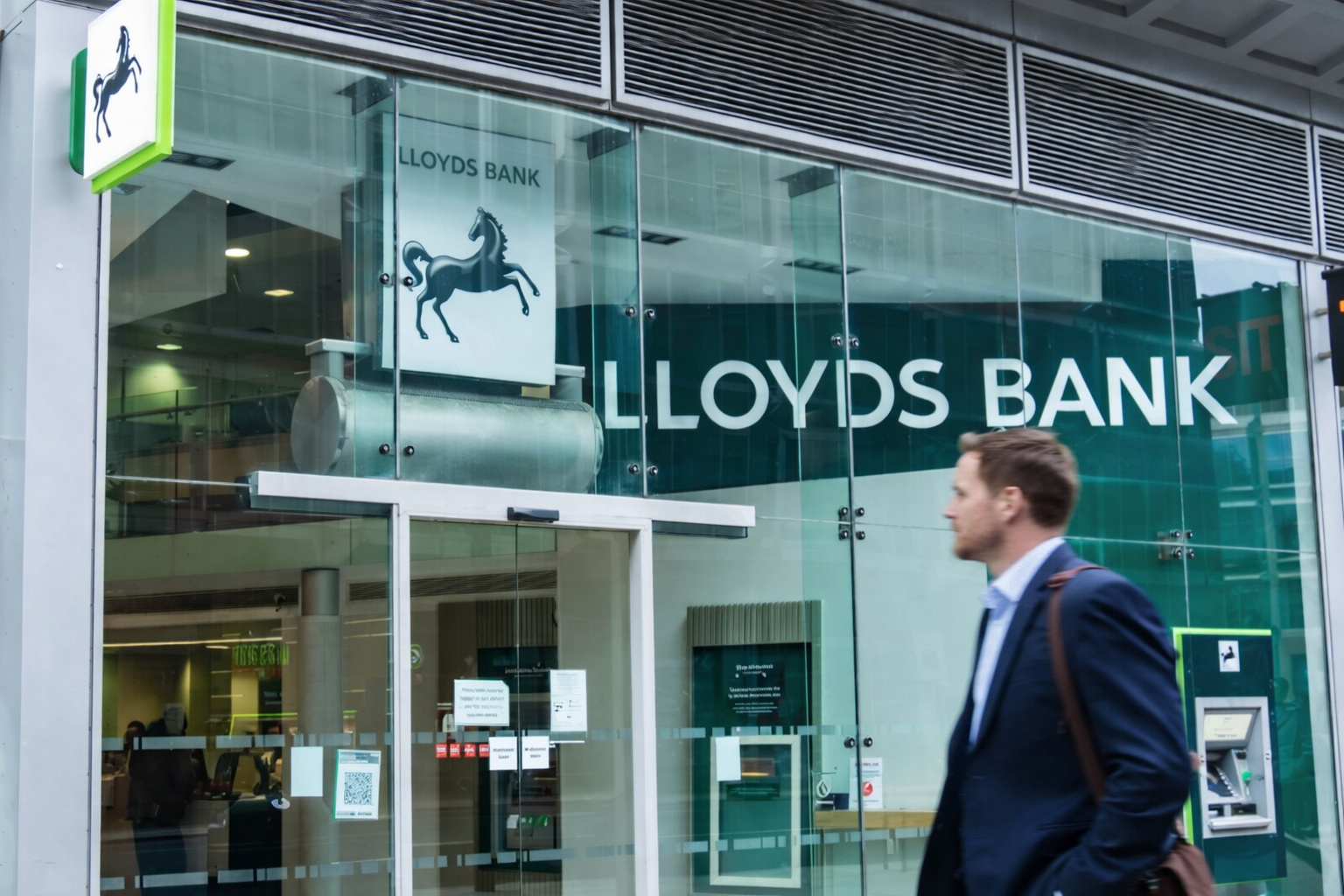
• Lloyds Banking Group will close 95 more branches, reducing its national footprint to 610 locations.
• Digital adoption—over 21 million primary app users—is driving structural cost and distribution changes.
• The strategic pivot strengthens efficiency but raises long-term questions around financial inclusion and cash access.
Lloyds Banking Group confirmed it will shut 95 additional branches across Lloyds Bank, Halifax, and Bank of Scotland between May 2026 and March 2027.
This follows earlier closure announcements and continues a multi-year contraction of its physical network. Once completed, the group will operate just 610 branches nationwide—down dramatically from its historical footprint.
This is not cyclical cost-cutting. It is structural repositioning.
Management attributes the closures to sustained migration toward digital banking. More than 21 million customers now use Lloyds’ mobile apps as their primary channel.
The economic logic is clear. Physical branches carry fixed staffing and property costs. Digital infrastructure scales at marginal cost. For a universal bank facing margin pressure and competitive fintech alternatives, cost efficiency is strategic, not optional.
The bank emphasizes expanded digital support, 24/7 messaging, and alternative in-person options such as community bankers and PayPoint services. However, alternatives do not replicate full-service branch functionality.
For shareholders, branch rationalization typically improves cost-to-income ratios over time. Reduced property overhead and leaner staffing structures can lift operating leverage, especially if deposit volumes remain stable.
The UK banking environment remains competitive, and net interest margins face sensitivity to rate cycles. In that context, disciplined cost management enhances resilience.
However, branch reduction must be balanced against reputational and political risk. Financial inclusion remains a sensitive public issue in the UK, particularly in rural and lower-income communities.
The transition also intersects with the broader debate around physical cash. Industry body Link has confirmed additional shared banking hubs, but rollout speed trails branch closures.
Shared hubs offer withdrawals, deposits, and basic services, yet lack the advisory depth of traditional branches. For elderly customers, small businesses, and digitally excluded populations, the closure trend may amplify friction.
From a regulatory standpoint, policymakers continue monitoring cash accessibility. Accelerated closures could invite greater oversight.
The shift is not unique to Lloyds. Across the UK banking sector, high street presence continues to contract as customer preferences change.
Lloyds, as the country’s largest mortgage lender, carries symbolic weight. Its strategy signals how incumbent banks view the future: fewer physical assets, stronger digital interfaces, centralized advisory hubs, and greater automation.
The question is not whether digital banking will dominate. It already does. The question is how banks manage the transition without alienating segments that still depend on physical interaction.
Lloyds Banking Group is reshaping its distribution model to match modern customer behavior and protect profitability. The closures align with long-term cost discipline and operational modernization.
Yet transformation of this scale carries second-order effects—community impact, political scrutiny, and competitive positioning among digitally native challengers.
Execution will determine whether efficiency gains outweigh potential erosion of brand trust in affected communities.
Confidential Advisory: This publication is provided for informational purposes only and does not constitute investment advice. For a confidential discussion regarding portfolio positioning within the European banking sector, consult a qualified financial adviser.
 Previous Post
 SKN | Assessing Mitsubishi UFJ Financial Group’s Valuation After Reaffirmed Profit And Dividend Forecasts
 Next Post
 SKN | Canada’s Big Six Back NATO Defence Bank: What BMO’s Role Signals for Institutional Capital

March 27, 2026

March 27, 2026

March 27, 2026

March 27, 2026
 Optimized by Seraphinite Accelerator


