
Finance
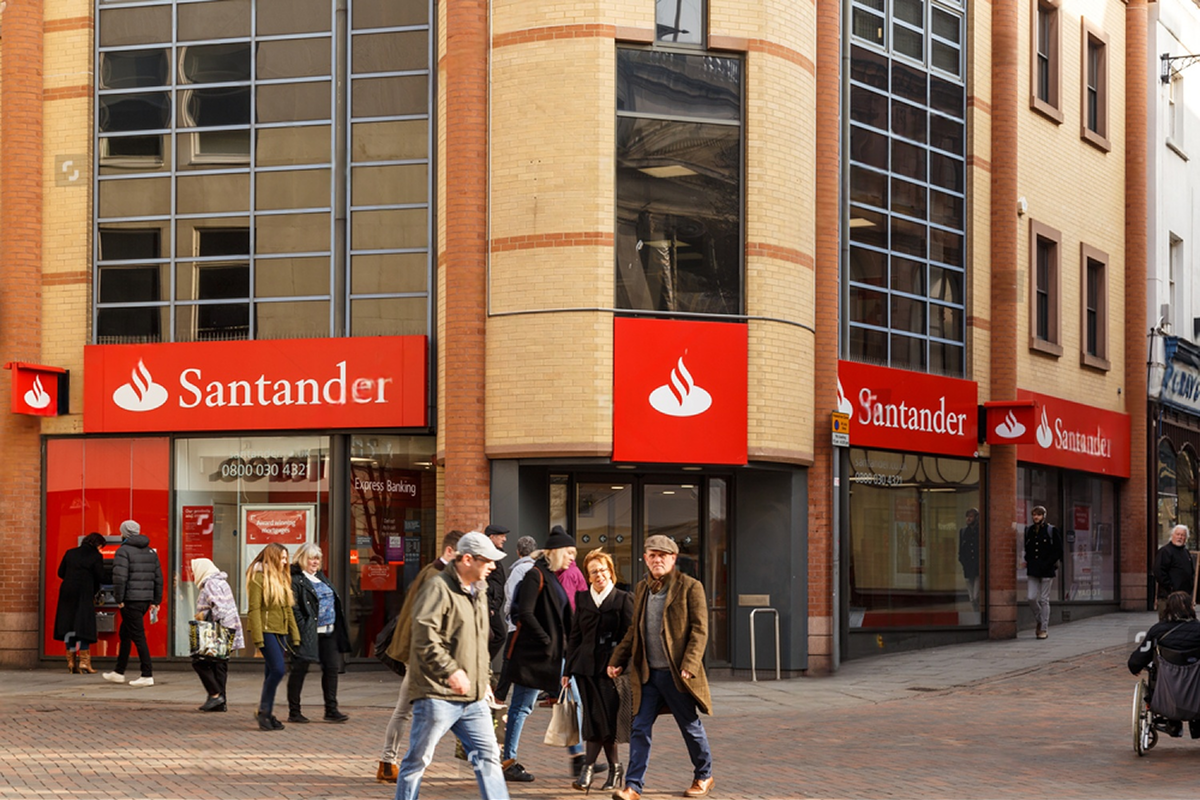
Banco Santander’s planned acquisition of Webster Financial materially expands its U.S. footprint and reshapes geographic earnings mix.
The transaction signals a deliberate shift toward diversified fee income and balance-sheet efficiency rather than home-market concentration.
Execution risk now centers on regulatory approval, integration discipline, and capital allocation sequencing through 2026–2028.
Banco Santander has agreed to acquire Webster Financial in a cross-border transaction expected to close in the second half of 2026, subject to customary regulatory approvals. The strategic logic is clear: deepen U.S. exposure while refining the group’s overall risk and earnings composition.
This is not a peripheral expansion. It is structural repositioning.
The United States remains the world’s deepest banking market, with diversified lending demand and resilient fee-generation capacity. By absorbing Webster Financial, Santander increases scale across deposits, commercial lending, and fee-based activities.
For global bank investors, this reinforces Santander’s identity as a diversified multinational rather than a Spain-centric lender. Geographic dispersion reduces earnings concentration risk, but it introduces integration complexity and regulatory oversight layers.
Scale in the U.S. is strategic. But scale alone does not determine return quality.
Santander enters this transaction following an active capital management cycle. Since late 2023, management has completed €9.39 billion in share buybacks, reducing the share count by nearly 14%. Net income in 2025 reached €14.10 billion, underscoring internal capital generation strength.
The sequencing is deliberate. Retained earnings and buybacks demonstrate balance-sheet flexibility. Adding Webster suggests management is redeploying capital toward long-term structural positioning rather than relying solely on capital return optics.
For investors, the question shifts from capacity to discipline. How will capital be balanced between integration funding, future buybacks, and dividend continuity?
Management has framed the transaction as risk-profile enhancing. A broader U.S. platform may dilute exposure to specific regional cycles and increase fee income stability.
However, the U.S. credit cycle differs from European dynamics. Asset quality trends, deposit competition, and regulatory capital standards vary materially. Integration risk, cultural alignment, and operational harmonization become decisive variables.
Peers such as BBVA and HSBC Holdings have also adjusted U.S. strategies in recent years, reflecting both opportunity and competitive intensity. Santander’s success will depend on whether Webster enhances return on tangible equity without amplifying credit volatility.
Management has emphasized cost and operational efficiencies. Investors should expect clarity around integration synergies, technology consolidation, and revenue cross-sell opportunities.
Efficiency narratives are persuasive at announcement. Valuation support depends on realized cost-income improvements and sustained capital ratios post-acquisition.
The U.S. expansion must enhance operating leverage, not dilute it.
Regulatory approvals in the United States will be a primary gating factor. Capital buffer recalibration, stress-test implications, and integration timelines warrant scrutiny.
Credit metrics across both Santander’s existing U.S. operations and Webster’s portfolio will be closely examined as the deal progresses. A diversified revenue mix can smooth earnings, but only if asset quality remains stable.
Between 2026 and 2028, the central evaluation will be whether Santander’s geographic diversification translates into durable earnings resilience or incremental balance-sheet complexity.
Scale can reduce risk concentration. It can also compound operational risk if integration falters. The distinction will define Santander’s valuation trajectory over the next cycle.
For confidential dialogue regarding cross-border banking consolidation, capital allocation sequencing, and portfolio positioning within globally diversified financial institutions, our senior advisory team is available for private consultation tailored to institutional and international wealth strategies.
 Previous Post
 SKN | Raiffeisen Switzerland: Strategic Insights for HNWI in the Evolving Private Banking Landscape
 Next Post
 SKN | Citigroup CEO Jane Fraser’s 2025 Pay Rises to $42 Million as Transformation Advances
March 27, 2026

March 27, 2026

March 27, 2026

March 27, 2026
 Optimized by Seraphinite Accelerator


