

Finance
Key Takeaways:
Morgan Stanley’s push to mobilize as much as $1.5 trillion toward U.S. innovation comes at a time when global financial institutions are increasingly positioning themselves around the next generation of economic infrastructure. Artificial intelligence, advanced manufacturing, cybersecurity, energy systems and other technology-intensive sectors are demanding substantial capital, while governments and banks are seeking greater private-sector participation. For HNWI clients, the important development is not simply the size of the initiative. It is what the commitment says about where institutional capital is expected to concentrate over the coming years.
A large-scale institutional initiative of this nature reflects a broader shift in how banks are approaching strategic growth. Traditional wealth management increasingly intersects with private markets, structured financing, direct lending and institutional alternatives.
For private clients, this creates both opportunity and complexity. Access to innovation-led investments may expand, but so does the need for disciplined due diligence. Private-market exposure can involve longer holding periods, valuation uncertainty, limited liquidity and more complicated ownership structures than conventional listed securities.
The appropriate question for a private banker is therefore not simply whether a client can access a particular opportunity. It is whether the exposure fits within the family’s broader liquidity, tax, succession and risk framework.
The scale of institutional capital flowing toward U.S. innovation could create an expanding ecosystem of private companies, infrastructure projects and specialist investment vehicles. For sophisticated investors, this may eventually translate into more opportunities for co-investment and private-market participation.
However, capital preservation requires separating strategic allocation from operational liquidity.
Families with significant cross-border assets should maintain a clear distinction between capital intended for long-term growth and assets required for near-term obligations, tax payments, acquisitions or family-office operations. The greater the allocation to illiquid assets, the more important that liquidity planning becomes.
A Swiss private bank can play an important role here by coordinating custody, financing, currency management and liquidity rather than treating each investment in isolation.
The reported effort by Chinese banks to sell approximately $8.2 billion of distressed credit-card debt presents a contrasting picture. It points to continuing pressure within parts of China’s consumer-credit system and demonstrates how rapidly banks can move from balance-sheet expansion toward risk reduction.
For international wealth holders, this distinction matters. A financial institution’s headline size or market position does not automatically translate into equal balance-sheet resilience across jurisdictions. Credit quality, provisioning, regulatory requirements and the structure of local banking systems can vary considerably.
The lesson is particularly relevant when families maintain operating accounts, financing facilities or investment relationships across Asia, Europe and the Middle East.
The combination of aggressive innovation financing in the United States and credit cleanup in China highlights a fragmented global financial environment.
HNWI families should periodically review where cash is held, which institutions provide credit, how concentrated their banking relationships are and whether liquidity remains available under stressed market conditions. Counterparty diversification should also be assessed at the legal-entity level rather than simply by banking brand.
For globally mobile families, this is ultimately an exercise in resilience. The objective is not to predict which market will outperform, but to ensure that one institution, currency, jurisdiction or credit cycle cannot unnecessarily disrupt the wider wealth structure.
Strategic perspective: Morgan Stanley’s innovation initiative points toward a growing institutional appetite for long-duration U.S. growth themes, while China’s distressed-credit sales demonstrate that balance-sheet repair remains equally important elsewhere. For sophisticated wealth holders, the appropriate response is a structure that can participate in long-term growth without sacrificing liquidity, discretion or capital resilience.
For a confidential discussion regarding your cross-border banking structure, contact our senior advisory team.
 Previous Post
 SKN | Bank of Lithuania Action Raises the Stakes for Payment-Firm Resilience
Next Post SKN | BNY Mellon’s Next Chapter: Why Scale, Custody and Wealth Infrastructure Matter for Global Families

September 8, 2026
September 8, 2026

September 8, 2026

September 8, 2026
SKN | Charles Schwab Expands Crypto Access as Shares Trade Below Estimated Fair Value
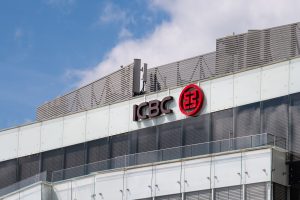
SKN | Why Does the World’s Largest Bank Still Need State Capital? What ICBC’s Recapitalization Signals for HNW Families
SKN | CaixaBank’s Neobank Strategy: Why Digital Convenience Is Becoming Part of Institutional Banking
 Optimized by Seraphinite Accelerator


