

Finance
Key Takeaways:
A regulatory intervention against a payments provider in Lithuania offers a useful reminder for globally mobile families: access to money can become a separate risk from ownership of money. For HNWI clients operating across Europe and maintaining relationships with banks, fintech platforms and payment institutions in multiple jurisdictions, operational continuity deserves the same attention as investment risk. A disruption at a regulated provider can affect payroll, supplier payments, currency transfers and access to operating liquidity even when the underlying wealth remains entirely intact.
The significance of the Bank of Lithuania action lies in the role payment institutions now play within international financial structures. Entrepreneurs and family offices increasingly rely on specialised providers for cross-border transfers, corporate payments, foreign-exchange execution and treasury functions.
These arrangements can be efficient, but efficiency can create concentration risk. When a single provider handles a meaningful share of a family’s payment activity, regulatory intervention can turn an operational inconvenience into a liquidity event.
The prudent distinction is between asset custody and payment access. A family can have substantial assets held safely at a major private bank while still experiencing disruption because a separate payment provider sits between the bank and the recipient.
Swiss private banks remain central to sophisticated wealth structures because they combine custody, financing, liquidity management and international banking capabilities. Yet a Swiss banking relationship does not eliminate third-party operational exposure.
Payment instructions may involve correspondent banks, foreign-exchange providers, local payment institutions or fintech infrastructure. Each additional link introduces another point at which compliance reviews, regulatory intervention or technology failures can interrupt the movement of funds.
For families with substantial international commitments, the relevant question is therefore not simply, “Where are my assets held?” It is also, “How many independent routes exist to access and move liquidity?”
A resilient structure should allow essential payments to continue if one provider becomes unavailable. This does not necessarily require maintaining numerous bank accounts. Instead, the objective should be controlled redundancy.
Families should identify their critical payment corridors and establish alternative routes for major currencies and jurisdictions. Operating companies should have contingency banking arrangements, while family offices should maintain a clear record of which institutions provide custody, payments, foreign exchange and financing.
Particular attention should be given to jurisdictions where a single regulated institution performs several functions. Convenience should not be allowed to obscure concentration risk.
The Lithuanian intervention reinforces a broader principle of modern wealth management: financial resilience depends not only on the quality of the balance sheet but also on the reliability of the infrastructure surrounding it.
For globally mobile families, liquidity should therefore be tested under stress. Could essential expenses still be paid if a provider were suspended tomorrow? Could funds be transferred through another institution without creating unnecessary compliance friction? Are the family’s banking relationships sufficiently diversified without becoming administratively excessive?
These are practical questions of capital preservation, discretion and efficiency. The strongest wealth structures are designed so that regulatory intervention at one institution does not compromise the family’s wider financial architecture.
For a confidential discussion regarding your cross-border banking structure, contact our senior advisory team.
 Previous Post
 SKN | Global Banking Stocks Gain as U.S. Bank Shares Offset Mixed European Performance
Next Post SKN | Morgan Stanley’s $1.5 Trillion Innovation Push Signals a New Phase in Global Capital Allocation

September 8, 2026
September 8, 2026

September 8, 2026

September 8, 2026
SKN | Charles Schwab Expands Crypto Access as Shares Trade Below Estimated Fair Value
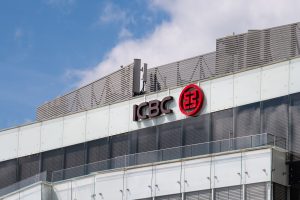
SKN | Why Does the World’s Largest Bank Still Need State Capital? What ICBC’s Recapitalization Signals for HNW Families
SKN | CaixaBank’s Neobank Strategy: Why Digital Convenience Is Becoming Part of Institutional Banking
 Optimized by Seraphinite Accelerator


