
Finance
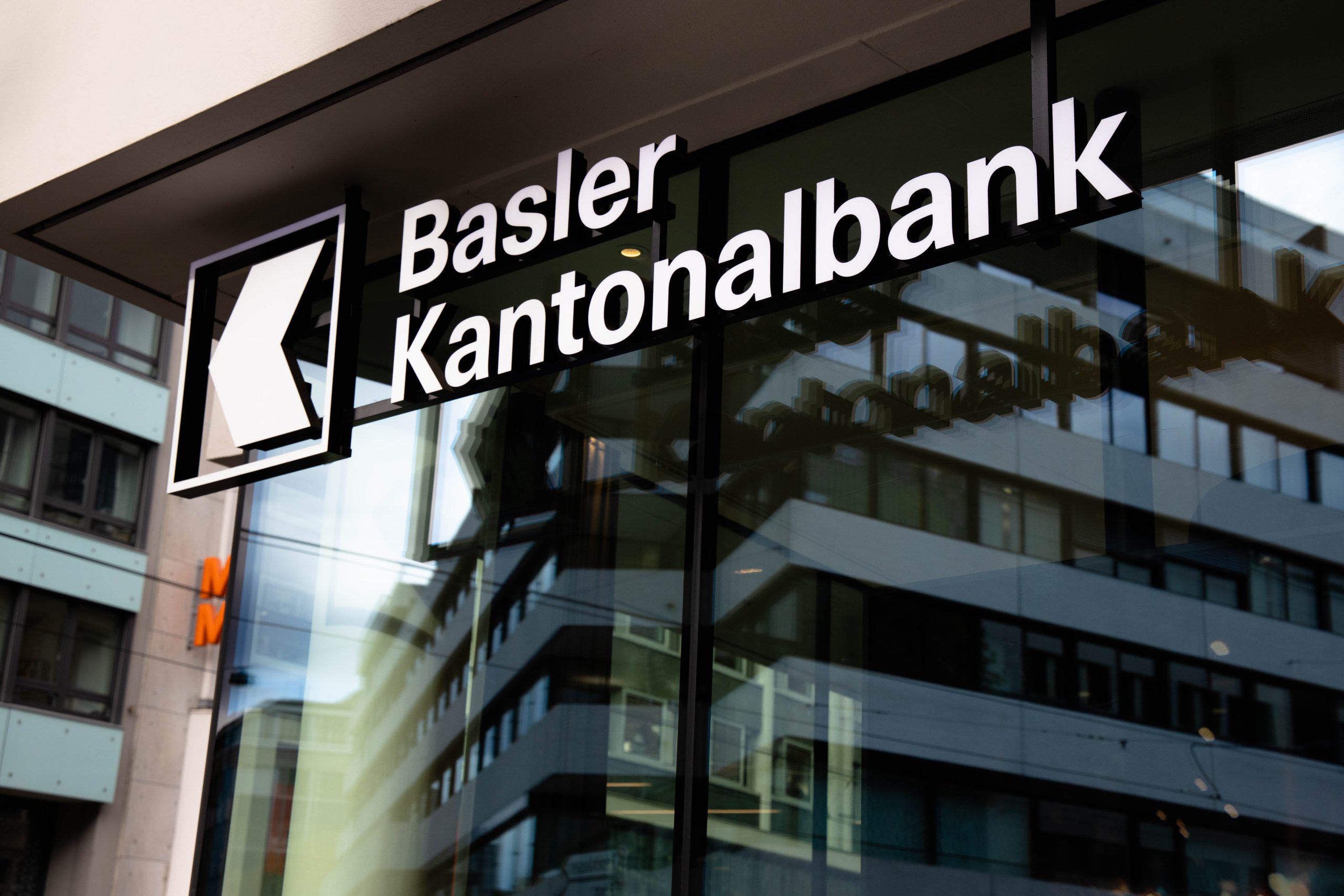
Basler Kantonalbank is entering an interesting phase in Swiss private banking. The institution remains deeply rooted in Basel, but its strategy increasingly reaches beyond traditional regional banking into Private Banking, institutional clients, asset management and wealth succession. That creates a different proposition for HNW families from the one offered by Switzerland’s largest internationally focused private banks. The value is not simply scale. It is the combination of Swiss stability, a regional institutional footprint and a growing wealth-management capability that can potentially complement a more globally oriented Zurich or Geneva relationship.
BKB benefits from a business model built around Switzerland rather than an extensive international lending network. That distinction matters. The group’s activities remain concentrated on Swiss private clients, companies and institutional investors, with international exposure deliberately limited in areas such as corporate lending.
For an HNW family, a more contained geographic risk profile can be useful. A bank whose core balance sheet is closely connected to Swiss clients and Swiss assets may provide a different form of counterparty diversification from a globally systemically important institution whose earnings and risk profile span numerous economies.
That does not automatically make one model preferable. It means the banking relationship can be assigned a different strategic role.
BKB entered the second half of 2026 with CHF 58.1 billion in total assets and CHF 55.7 billion in client assets. Its first-half 2026 group profit reached CHF 94.8 million, while the total capital ratio stood at 18.3%.
For HNW clients, the important point is not the headline earnings figure. It is the balance between capital, liquidity and the bank’s underlying business model. BKB’s capital position provides meaningful resilience, while its Swiss concentration can make the institution easier to understand within a broader counterparty map.
That makes BKB potentially relevant for families seeking to diversify Swiss banking relationships without adding another large international banking conglomerate to the structure.
BKB’s Strategy 2026+ places particular emphasis on above-average growth in Private Banking and institutional investment clients. This is strategically important because it moves the group further into the segment where HNW families increasingly demand sophisticated portfolio management, succession planning, financing and cross-border coordination.
The opportunity for BKB is clear: convert its existing Swiss client relationships into deeper wealth relationships while expanding its share of institutional assets.
For clients, however, growth should be evaluated through service depth rather than marketing breadth. Families should examine the actual investment architecture, reporting capabilities, international custody arrangements, credit offering and succession expertise available to them.
A Basel relationship does not need to compete with the family’s existing Zurich or Geneva private bank. In a well-designed structure, each institution can have a defined mandate.
BKB could provide a Swiss banking relationship for specific custody, financing, liquidity or regional requirements, while a larger private bank handles more complex international investment, lending or cross-border needs. This creates institutional optionality without unnecessarily multiplying relationships.
The key is legal-entity and functional clarity. Families should know which institution holds strategic assets, which provides financing, which executes transactions and which relationship is responsible for consolidated wealth reporting.
The deeper attraction of BKB is its potential role as a stable Swiss counterparty that is large enough to provide meaningful wealth services but still anchored in a clearly defined domestic banking model.
For families concerned with capital preservation and discretion, that can be valuable. The objective, however, should not be to concentrate more assets simply because a relationship feels familiar. It should be to create a banking architecture in which individual institutions remain replaceable without forcing strategic wealth to move under pressure.
BKB’s next phase therefore deserves to be viewed as an opportunity to reassess the role of regional Swiss banking within a global wealth structure. For the right family, the advantage may not be replacing the primary private bank. It may be having a strong Swiss alternative that strengthens the architecture around it.
For a confidential discussion regarding your Swiss banking relationships, custody diversification and cross-border wealth architecture, contact our senior advisory team.

September 21, 2026

September 21, 2026

September 21, 2026

September 21, 2026
 Optimized by Seraphinite Accelerator


