

Finance
Insider trading disclosures remain closely monitored across institutional investment circles because they offer insight into executive behavior, capital allocation preferences, and internal confidence levels within publicly traded companies.
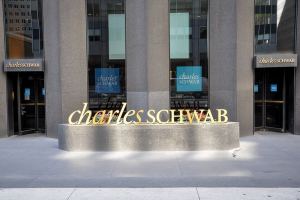
According to a recent SEC filing, a Charles Schwab insider sold shares worth approximately $2.54 million. While such headlines often trigger short-term market speculation, sophisticated investors rarely interpret insider transactions in isolation.
Within private banking and wealth management environments, insider sales are typically analyzed through a broader strategic lens that considers executive compensation structures, tax planning considerations, estate diversification strategies, and liquidity management objectives.
For high-net-worth individuals and internationally diversified family offices, the more important question is rarely whether an insider sold shares — but rather what the transaction reveals about broader institutional positioning and long-term business fundamentals.
In public markets, insider buying frequently receives stronger institutional attention than insider selling. This distinction exists because executives may sell shares for a wide range of non-operational reasons unrelated to company performance.
Among the most common drivers are:
Portfolio diversification strategies designed to reduce concentrated equity exposure.
Tax and estate planning considerations, particularly for senior executives managing large long-term compensation packages.
Liquidity planning associated with personal investments, family office obligations, or philanthropic structures.
As a result, institutional investors typically focus less on isolated transactions and more on broader behavioral trends across executive leadership teams.
Despite periodic market scrutiny surrounding insider activity, Charles Schwab continues maintaining significant relevance within the global financial services landscape.
The company occupies an important position across retail brokerage, wealth management, advisory services, and custody infrastructure — sectors that remain deeply connected to long-term capital allocation trends and investor participation levels.
Within major wealth management centers such as Zurich, Geneva, Singapore, and New York, institutional investors continue evaluating financial services firms based on several core metrics:
Balance sheet resilience, particularly in environments shaped by higher interest rates and tighter liquidity conditions.
Client asset retention, which remains a critical indicator of franchise stability and long-term earnings durability.
Operational scale and diversification, especially as global wealth platforms compete for cross-border client flows and advisory relationships.
For globally diversified investors, financial institutions remain deeply interconnected with broader capital market stability and international liquidity systems.
As a result, institutional investors continue monitoring how wealth management firms adapt to:
Changing interest rate environments affecting deposit flows and lending economics.
Regulatory evolution influencing compliance costs, capital requirements, and operational flexibility.
Client migration trends reshaping where affluent investors choose to custody and manage assets internationally.
In this context, insider transactions often become secondary considerations compared to broader questions surrounding long-term franchise resilience and capital efficiency.
Despite the sector’s strategic importance, institutional investors remain highly attentive to several ongoing risks affecting financial services firms globally.
Among the most closely monitored concerns are deposit competition pressures, interest rate volatility, regulatory tightening, operational cybersecurity risks, and potential market slowdowns affecting trading and advisory activity.
Investors also continue evaluating how global wealth transfer dynamics and technological transformation may reshape the competitive landscape across the wealth management sector over the coming decade.
The recent insider transaction involving Charles Schwab ultimately reinforces a broader institutional principle: sophisticated investors rarely react to isolated headlines without evaluating the deeper structural context surrounding a business.
For family offices, entrepreneurs, and internationally diversified investors, long-term wealth preservation strategies continue depending more heavily on balance sheet quality, operational resilience, regulatory positioning, and liquidity management than short-term executive trading activity.
As global financial systems continue evolving amid monetary uncertainty and geopolitical fragmentation, institutional investors will likely remain focused on financial platforms capable of sustaining trust, stability, and scalable wealth management infrastructure across increasingly complex international markets.
For a confidential discussion regarding your international wealth management structure and cross-border capital preservation strategy, contact our senior advisory team.
Previous Post SKN | RBC Capital Markets Maintains Strategic Confidence in SSR Mining Amid Evolving Precious Metals Landscape
Next Post SKN | Lloyds Banking Expands U.S. Ambitions Through Strategic Infrastructure and Data Centre Financing

August 7, 2026
August 7, 2026

August 7, 2026

August 7, 2026

SKN | UBS Forecasts Gold Could Reach $5,000 per Ounce by First Half of 2027

SKN | Global Banking Stocks Show Mixed Momentum as U.S. Banks Advance While European Performance Diverges

SKN | Garanti BBVA Issues $30 Million Sustainable Bond to Advance Gender Equality and Women’s Economic Empowerment
 Optimized by Seraphinite Accelerator


