Finance
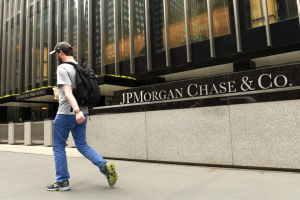
Rising shareholder dissent at a major global banking institution is not simply a corporate governance event. For sophisticated investors, it is a signal of underlying tension between capital strategy, regulatory expectations, and long-term shareholder alignment. While public attention focuses on boardroom dynamics, the more relevant question for high-net-worth individuals is how such governance friction may translate into shifts in risk appetite, balance sheet behaviour, and strategic continuity.
In previous cycles, investor concern in large banks tended to focus on profitability, efficiency ratios, or dividend levels. That framework is becoming less relevant. The current environment is defined by structural governance pressure—where shareholders increasingly challenge strategic direction, capital deployment decisions, and cost structures simultaneously.
For globally diversified wealth holders, this matters because governance instability often precedes strategic recalibration. When boards face sustained dissent, institutions tend to adjust capital buffers, reassess business lines, or shift risk exposure. These adjustments may not be immediately visible in client-facing operations but can influence credit allocation, liquidity provisioning, and cross-border execution priorities over time.
From a Swiss private banking perspective, governance instability in major international banks is interpreted through a systemic lens rather than an isolated corporate event. Large global banks act as counterparties, custodians, and liquidity providers across international portfolios. Any shift in their internal governance dynamics can therefore influence the broader ecosystem in which capital is deployed.
For HNWI clients, the key implication is indirect exposure. Even without direct equity holdings, many portfolios rely on global banking infrastructure for execution, settlement, and financing. Governance tension can increase operational conservatism within these institutions, potentially affecting speed, pricing, and flexibility of cross-border services.
Swiss private banks operate under a fundamentally different governance model. Many are either privately held, foundation-linked, or governed under long-term capital preservation mandates that reduce exposure to short-term shareholder activism. This structural design limits volatility in strategic direction, even during periods of global financial stress.
For clients, this translates into predictability. Zurich and Geneva institutions prioritise continuity of service, balance sheet strength, and regulatory alignment over rapid strategic repositioning. In practice, this means fewer abrupt shifts in risk appetite, more stable custody frameworks, and a lower probability of disruption arising from shareholder-driven strategy changes.
One of the less visible consequences of governance pressure is its influence on capital allocation discipline. When boards face conflicting shareholder expectations, capital deployment decisions can become more conservative or, in some cases, more reactive.
For wealth structures that depend on consistent access to credit lines, liquidity facilities, or execution capacity, this introduces a secondary layer of uncertainty. It is not market risk in the traditional sense, but institutional behaviour risk. Over time, this can affect the efficiency of multi-jurisdictional wealth structures, particularly those involving leveraged strategies or active portfolio rebalancing.
The appropriate response is not to react to individual governance events, but to reassess exposure to governance-sensitive institutions as part of broader structural planning. This includes evaluating where custodial risk is concentrated, how dependent portfolios are on specific global banking groups, and whether alternative jurisdictions provide greater operational stability.
Swiss private banking offers a natural consolidation point for this reassessment. Its governance architecture, regulatory predictability, and capital strength reduce exposure to shareholder-driven volatility cycles. For globally mobile families and entrepreneurs, this creates a stabilising layer within otherwise complex financial ecosystems.
The increasing visibility of shareholder dissent in major banks reflects a broader shift: governance is becoming a primary risk variable in global finance. It now sits alongside credit risk, market risk, and liquidity risk as a factor that can influence institutional behaviour and, by extension, client outcomes.
For HNWI investors, the implication is clear. Wealth preservation is no longer solely about asset allocation, but about institutional selection. The quality of governance behind a financial institution is now directly linked to the predictability of outcomes across jurisdictions.
Swiss private banking continues to offer one of the most stable governance environments globally, making it a preferred anchor for long-term capital preservation and legacy structuring.
For a confidential discussion regarding your cross-border banking structure and how to optimise institutional stability within your global portfolio, contact our senior advisory team.
 Previous Post
 SKN | Global Banking Stocks Show Mixed Performance as Diverging Regional Momentum Offsets U.S. Weakness
Next Post SKN | Leadership Shifts in Global FX: What Institutional Realignment Means for Currency Strategy and Swiss-Based Wealth

September 9, 2026

September 9, 2026

September 9, 2026

September 9, 2026
 Optimized by Seraphinite Accelerator