Finance
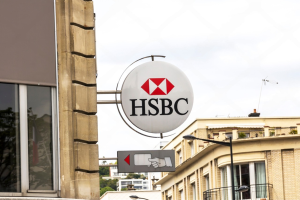
The latest developments involving HSBC and UBS offer a revealing snapshot of the evolving global banking landscape. HSBC reported first-half profit of approximately $19.5 billion, significantly exceeding many market expectations, while UBS faced a record $125 million civil penalty from the U.S. Financial Crimes Enforcement Network (FinCEN) over historical compliance shortcomings. Together, these events highlight an increasingly important reality for sophisticated wealth holders: financial strength and regulatory discipline must now be evaluated together.
For entrepreneurs, family offices, and globally mobile investors working with Swiss and international private banks, the question is no longer simply which institution generates the highest earnings. The more strategic consideration is whether a bank combines sustainable profitability with governance standards capable of protecting clients in an era of expanding international regulation.
HSBC’s first-half performance demonstrates the resilience that diversified international banking franchises can achieve. Its broad geographic footprint across Asia, Europe, the Middle East, and the Americas provides multiple revenue streams, reducing dependence on any single economic cycle or regional interest-rate environment.
For private banking clients, sustained profitability supports continued investment in cybersecurity, digital infrastructure, relationship management, regulatory compliance, and cross-border advisory capabilities. These investments are increasingly critical as wealthy families demand sophisticated banking services spanning multiple jurisdictions, currencies, and legal structures.
From the perspective of Zurich and Geneva wealth advisers, consistent earnings are valuable not because they directly influence client portfolios, but because financially strong institutions generally possess greater capacity to invest in operational resilience and long-term client service.
The FinCEN enforcement action against UBS serves as a reminder that regulatory expectations continue to rise globally. Anti-money laundering controls, sanctions screening, transaction monitoring, and client due diligence have become strategic priorities across every major international financial centre.
Although the financial penalty itself represents only a modest fraction of UBS’s capital base, the broader significance lies in the industry’s direction. Regulators increasingly expect banks to demonstrate continuous improvement in governance frameworks rather than merely satisfying minimum legal requirements.
For HNWI clients, stronger regulatory oversight should not automatically be interpreted as a negative development. Institutions that successfully adapt to these standards often emerge with more robust operational frameworks, stronger internal controls, and greater resilience against reputational and legal risks.
International families increasingly evaluate banks using criteria that extend well beyond investment performance. Governance quality, operational continuity, digital security, jurisdictional expertise, and regulatory credibility now influence banking relationships just as much as traditional wealth management capabilities.
This shift is particularly relevant for clients with businesses, trusts, investment companies, or family offices operating across Switzerland, the European Union, the United Kingdom, the United States, and Asia. Complex ownership structures require institutions capable of navigating multiple regulatory environments efficiently while maintaining confidentiality and operational consistency.
Leading Swiss private banks have responded by significantly expanding investment in artificial intelligence, compliance technology, financial crime prevention systems, and integrated cross-border advisory teams. These developments are transforming compliance from a cost centre into a competitive advantage.
The contrast between HSBC’s earnings momentum and UBS’s regulatory challenge illustrates that modern private banking is entering a new phase where financial performance alone no longer defines institutional excellence. The strongest wealth management platforms will increasingly be those capable of combining sustainable profitability, rigorous governance, technological sophistication, and seamless international execution.
For internationally diversified families, this is an appropriate moment to review banking relationships through a broader strategic lens. Balance sheet strength, regulatory culture, operational resilience, and cross-border capabilities should be assessed together as part of a long-term wealth preservation strategy designed to withstand evolving global financial regulation.
For a confidential discussion regarding your cross-border banking structure, institutional diversification strategy, or Swiss private banking relationships, contact our senior advisory team.
 Previous Post
 SKN | Regulatory Pressure Intensifies: What UBS’s Historic $125 Million Fine Means for Global Wealth Structures
Next Post SKN | When Banking Access Is for Sale: What the Dark Web Means for Cross-Border Wealth Protection

September 8, 2026

September 8, 2026

September 8, 2026

September 8, 2026
 Optimized by Seraphinite Accelerator