Finance
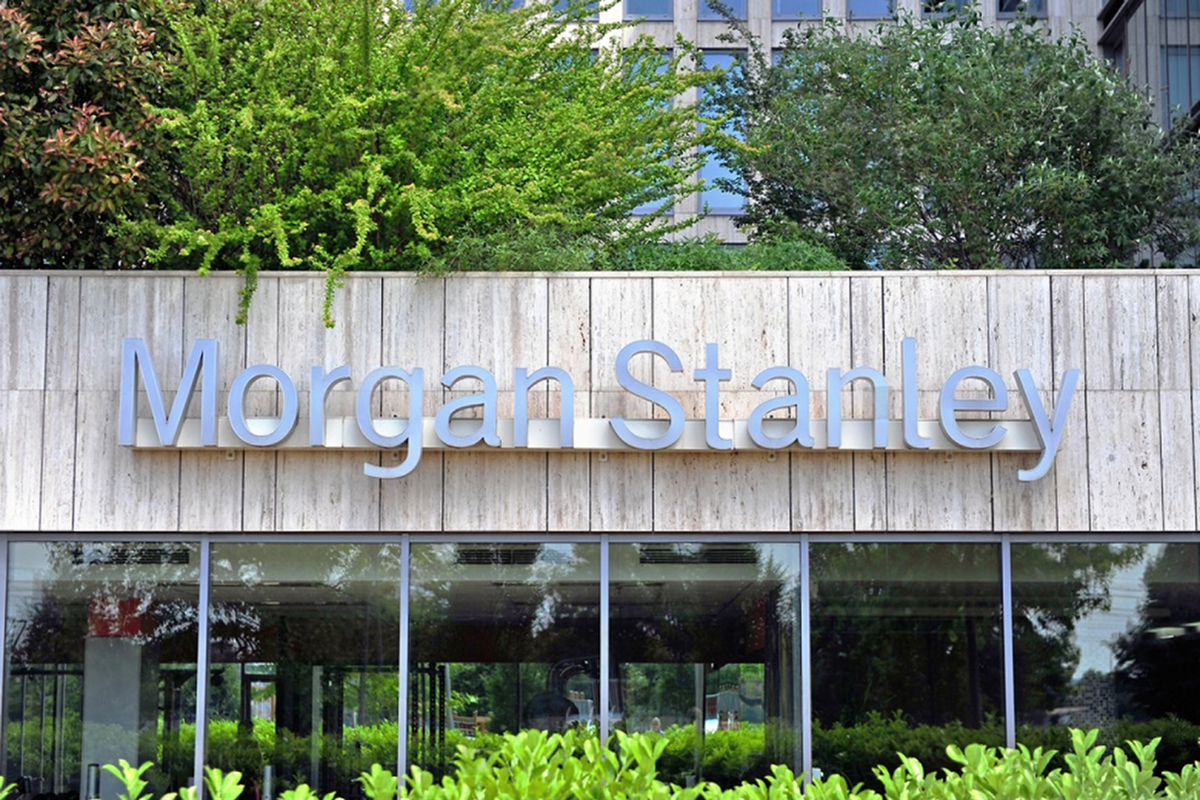
The rapid expansion of artificial intelligence is reshaping not only the technology industry but also the business models of the world’s leading investment banks. Morgan Stanley’s reported leadership of a $15 billion bond refinancing tied to a Google-backed Texas data center leased to Anthropic illustrates how global financial institutions are positioning themselves at the center of the AI infrastructure economy.
While public attention often focuses on semiconductor manufacturers and AI software developers, the financing behind hyperscale computing facilities has quietly become one of the fastest-growing opportunities for global capital markets. For institutions serving high-net-worth families and sophisticated investors, this represents a structural shift in how capital is deployed into long-term digital infrastructure.
The proposed refinancing demonstrates how investment banks are evolving beyond traditional advisory services. Morgan Stanley and participating lenders are not merely arranging capital—they are structuring financing for assets expected to generate stable long-term cash flows through multi-year leasing agreements.
Large AI data centers require enormous upfront investments covering land acquisition, power infrastructure, networking equipment, and specialized computing facilities. Refinancing these developments through bond markets allows project sponsors to recycle capital while providing institutional investors access to infrastructure-backed fixed-income opportunities.
For banks, these transactions generate underwriting fees, advisory mandates, and long-term client relationships extending across debt markets, treasury services, and future capital raises.
The growing demand for AI computing capacity is creating an entirely new category of infrastructure financing. Unlike traditional commercial real estate, AI facilities often operate under long-duration lease agreements with financially strong counterparties supported by substantial technology investment.
The involvement of Google-backed Anthropic provides an example of how strategic technology partnerships can strengthen financing structures by increasing visibility into future occupancy and revenue generation. As AI adoption accelerates, institutional investors continue searching for assets capable of delivering predictable cash flows while participating in long-term technology growth.
This trend increasingly resembles earlier investment cycles involving telecommunications networks, renewable energy projects, and cloud computing infrastructure.
For Morgan Stanley, transactions of this scale reinforce its position as a leading capital markets institution serving both technology innovators and institutional investors. The opportunity extends well beyond underwriting a single bond issuance.
As artificial intelligence infrastructure expands globally, banks with strong project finance, structured credit, and institutional distribution capabilities are positioned to participate across multiple financing cycles. This creates recurring revenue opportunities through refinancing, mergers and acquisitions, equity offerings, hedging solutions, and private capital advisory services.
Competition among global investment banks is therefore shifting toward securing mandates linked to AI infrastructure rather than focusing solely on traditional corporate financing.
For internationally diversified investors, the significance of this transaction extends beyond Morgan Stanley’s role as lead arranger. It reflects the emergence of AI infrastructure as a strategic asset class requiring substantial institutional capital and sophisticated financial engineering.
Private banks increasingly view these developments through the lens of long-term portfolio construction rather than short-term technology speculation. The financing ecosystem supporting artificial intelligence—from debt markets and private credit to infrastructure funds—may ultimately prove as significant as the technology companies themselves.
From a Swiss private banking perspective, the message is clear: institutions capable of connecting global capital with transformative infrastructure projects are strengthening their competitive positioning in an investment landscape increasingly shaped by artificial intelligence. The winners may not only be technology firms, but also the financial institutions that enable the next generation of digital infrastructure to scale efficiently.
For a confidential discussion regarding your cross-border banking structure, institutional portfolio strategy, or opportunities emerging across global infrastructure finance, contact our senior advisory team.

August 6, 2026

August 6, 2026

August 6, 2026

August 6, 2026

SKN | Capital One Defends 2021 Closure of Trump Accounts as AML Review Moves to Center of Legal Dispute

SKN | Bank of Montreal Balances Product Innovation With Valuation Questions After Semiconductor ETN Launch

SKN | ADNOC Strengthens Global Expansion Strategy with Senior Morgan Stanley Energy Banker Appointment
 Optimized by Seraphinite Accelerator