
Finance
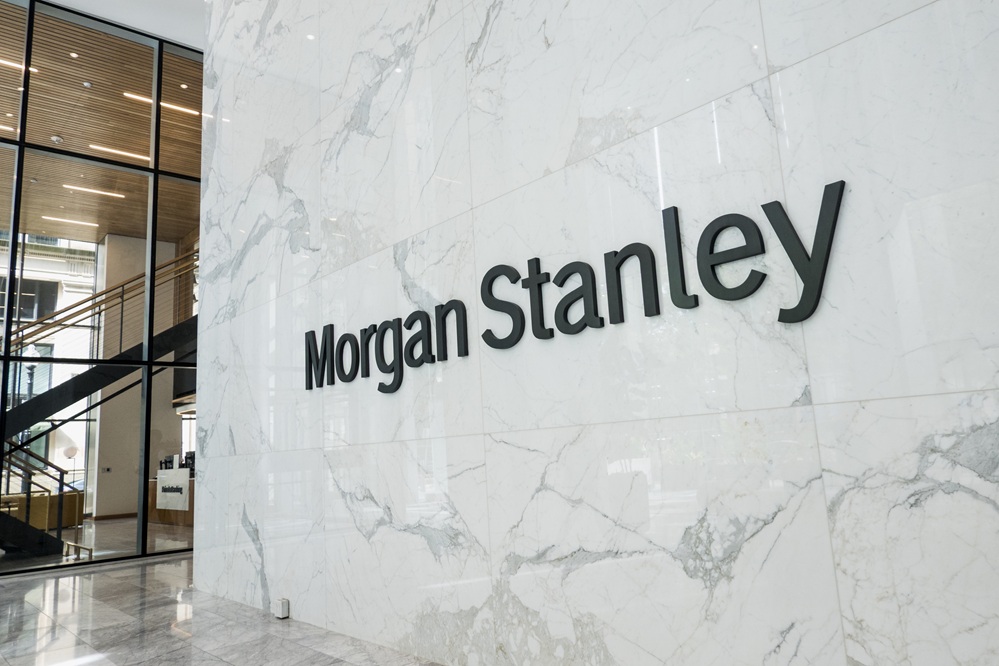
Morgan Stanley has begun converting US equities and Treasury securities into blockchain-based tokens through the Depository Trust & Clearing Corporation’s (DTCC) Tokenization Service, marking an important development in the integration of distributed ledger technology with established financial market infrastructure.
The service launched on October 28 and enables eligible DTCC participants to convert securities already held at the Depository Trust Company (DTC) into tokenized digital representations. Morgan Stanley confirmed its participation in a November 3 post on X, identifying itself as one of the first institutions to tokenize real-world assets through the platform.
The bank has not disclosed which securities were converted, the size of the positions, or whether the transactions involved proprietary holdings or assets managed on behalf of clients.
The distinction is important because the immediate development concerns the infrastructure supporting securities ownership and transfer rather than the introduction of a new investment product. Tokenization allows eligible traditional securities to exist in blockchain-based form while preserving their established legal and economic characteristics.
The DTCC service is operated by DTC, the organisation responsible for holding securities and supporting post-trade infrastructure across US financial markets. DTC safeguards more than USD 114 trillion in assets under custody.
Under the tokenization framework, eligible securities can be converted into digital representations and transferred to registered digital wallets selected by participants. These tokens retain the same CUSIP identifiers, ownership rights, economic entitlements, and investor protections as their conventional counterparts.
DTC continues to serve as the official custodian and record keeper, while tokenized representations can be converted back into conventional securities.
This structure addresses one of the central institutional considerations surrounding digital assets: how blockchain-based transfers can operate without weakening the established legal and operational framework governing securities ownership.
For banks, asset managers, and institutional investors, the ability to experiment with blockchain settlement while retaining conventional custody arrangements could reduce some of the operational barriers associated with digital securities adoption.
Morgan Stanley is one of 20 DTC participants that joined the tokenization service at launch. The group includes JPMorgan, Citi, Bank of America, Barclays, BNP Paribas, Fidelity Investments, State Street, UBS, and Citadel Securities.
DTCC said the platform was developed with input from more than 150 firms, reflecting broad industry involvement in the development of institutional tokenization infrastructure.
The organisation also reported that production transactions conducted in July included securities lending, collateral transfers, and US Treasury repurchase agreements.
Morgan Stanley’s Head of Digital Assets Strategy, Amy Oldenburg, said that integrating tokenized securities with established market infrastructure would provide practical experience to inform the continued development of the firm’s digital asset capabilities.
The participation of major financial institutions is significant because large-scale tokenization requires coordination across custodians, broker-dealers, clearing organisations, asset managers, and other market participants. A common infrastructure can potentially reduce fragmentation and improve interoperability between traditional financial systems and blockchain networks.
The regulatory groundwork for the DTCC service was established in December 2025, when the US Securities and Exchange Commission issued DTC a no-action letter permitting tokenization of specified securities under defined conditions.
The approved categories include Russell 1000 equities, exchange-traded funds tracking major indexes, and US Treasury bills, notes, and bonds.
This regulatory framework provides a basis for tokenizing selected securities while maintaining the existing market infrastructure and investor protections.
The current platform operates across two networks: the Canton Network and a private Hyperledger Besu network maintained by DTCC.
DTCC has outlined plans to expand integrations to Stellar and Circle’s Arc in 2027. Its longer-term roadmap also includes on-chain netting, digital cash capabilities, and enhanced settlement and collateral management functions. These developments remain indicative and subject to change.
The expansion of network integrations will be important in determining whether institutional tokenization can operate across multiple blockchain environments without creating additional operational complexity.
Morgan Stanley’s participation in the DTCC platform is separate from its plans to establish an alternative trading system (ATS) for tokenized equities.
The bank has been preparing to support trading in tokenized securities through its own ATS, which would allow securities to trade outside conventional public exchanges. The planned launch has been delayed from the second half of 2026 to the first quarter of 2027.
Oldenburg indicated that the bank needs suitable products and additional infrastructure in place before introducing the service.
Morgan Stanley is also developing broader digital asset capabilities. In September, it established a Digital Asset Lab to examine stablecoins, tokenized deposits, money market funds, and decentralised finance applications without introducing experimental systems directly into its core operations.
The bank has also been building digital wallet infrastructure intended to allow clients to hold and manage tokenized securities alongside traditional investments.
At TOKEN2049 in October, Oldenburg noted that institutional demand remained constrained by the limited availability of suitable tokenized products. She also projected that the tokenized real-world asset market could reach USD 3 trillion to USD 10 trillion by 2030, identifying private shares, structured notes, and investment funds as potential areas of development.
The institutional approach led by DTCC is developing alongside separate efforts to bring traditional equities onto blockchain networks.
A proposed tokenized stock venue involving OKX and Intercontinental Exchange has encountered objections from 56 companies, including Tesla, SpaceX, Amazon, and Nvidia. Their objections prevent the venue from listing third-party tokenized versions of their shares under the SEC’s innovation exemption.
Meanwhile, the New York Stock Exchange announced on November 2 that it had added Broadridge, Computershare, Equiniti, and Superstate as transfer-agent partners for its proposed blockchain-based trading platform. These firms join Securitize and tZERO.
The proposed NYSE platform is designed to support continuous trading, immediate settlement, and stablecoin-based funding while preserving conventional shareholder rights. However, it remains subject to regulatory approval, and no launch date has been announced.
These parallel developments illustrate two different approaches to financial market tokenization. Established institutions are seeking to integrate blockchain technology into existing securities infrastructure, while other platforms are developing new trading environments for digital representations of traditional assets.
The distinction will matter for market participants assessing custody, ownership verification, regulatory compliance, and interoperability.
DTCC argues that tokenization can improve liquidity, simplify collateral transfers, and make capital utilisation more efficient by allowing eligible assets to move in minutes rather than days.
If these capabilities scale, the implications could extend across securities lending, repo markets, prime brokerage, and institutional collateral management.
Faster settlement and asset transfers could reduce operational delays and allow financial institutions to deploy collateral more efficiently. However, the transition will require reliable digital identity systems, secure custody arrangements, consistent legal treatment, and interoperability between financial networks.
The early market remains subject to limitations. An International Monetary Fund study published in the previous month found that tokenized stocks continued to trade primarily outside US market hours and remained more volatile and less liquid than their traditional counterparts.
This highlights the difference between technological capability and mature market adoption. Blockchain infrastructure may improve the mechanics of securities transfers, but liquidity, investor participation, and regulatory certainty will determine its practical value.
Morgan Stanley’s participation in the DTCC Tokenization Service represents a meaningful step in the institutional development of digital securities. The significance lies not simply in placing traditional assets on blockchain networks, but in demonstrating how tokenization can be incorporated into established custody and post-trade infrastructure without removing existing ownership rights and investor protections.
For global banks and institutional investors, the potential benefits extend beyond transaction speed. More efficient collateral movement, improved settlement processes, and interoperability between traditional and digital financial systems could eventually influence how capital is deployed across financial markets.
However, broad adoption will depend on regulatory clarity, market liquidity, operational resilience, and the availability of suitable tokenized products. Morgan Stanley’s planned ATS launch in 2027 and DTCC’s proposed network integrations will be important developments to monitor.
The longer-term opportunity is the gradual convergence of traditional securities infrastructure and blockchain-based financial operations. Institutions capable of integrating both environments securely and efficiently may gain strategic advantages as digital asset markets mature.
For a confidential discussion regarding retail banking strategy, insurance distribution models, customer loyalty ecosystems, digital financial services, or cross-border financial innovation opportunities, contact our senior advisory team.

November 4, 2026

November 4, 2026

November 4, 2026

November 4, 2026

SKN | Charles Schwab Expands Balance-Sheet Assets to $13.3 Trillion as Lending Growth Tests Retail Custodial Architecture
SKN | Bank of America Absorbs $1.2 Billion Regulatory Fine as Net Interest Income Expands to $16.6 Billion

SKN | Migros Bank Posts 14.3% Profit Rise to CHF 151.5 Million Amid Domestic Balance-Sheet Discipline
 Optimized by Seraphinite Accelerator



